ADHD as a continuum
The features of ADHD are often said to be continuously distributed throughout the population. This means that while some people clearly do have ADHD and others clearly do not, there are all different shades of grey between the extremes of black and white.
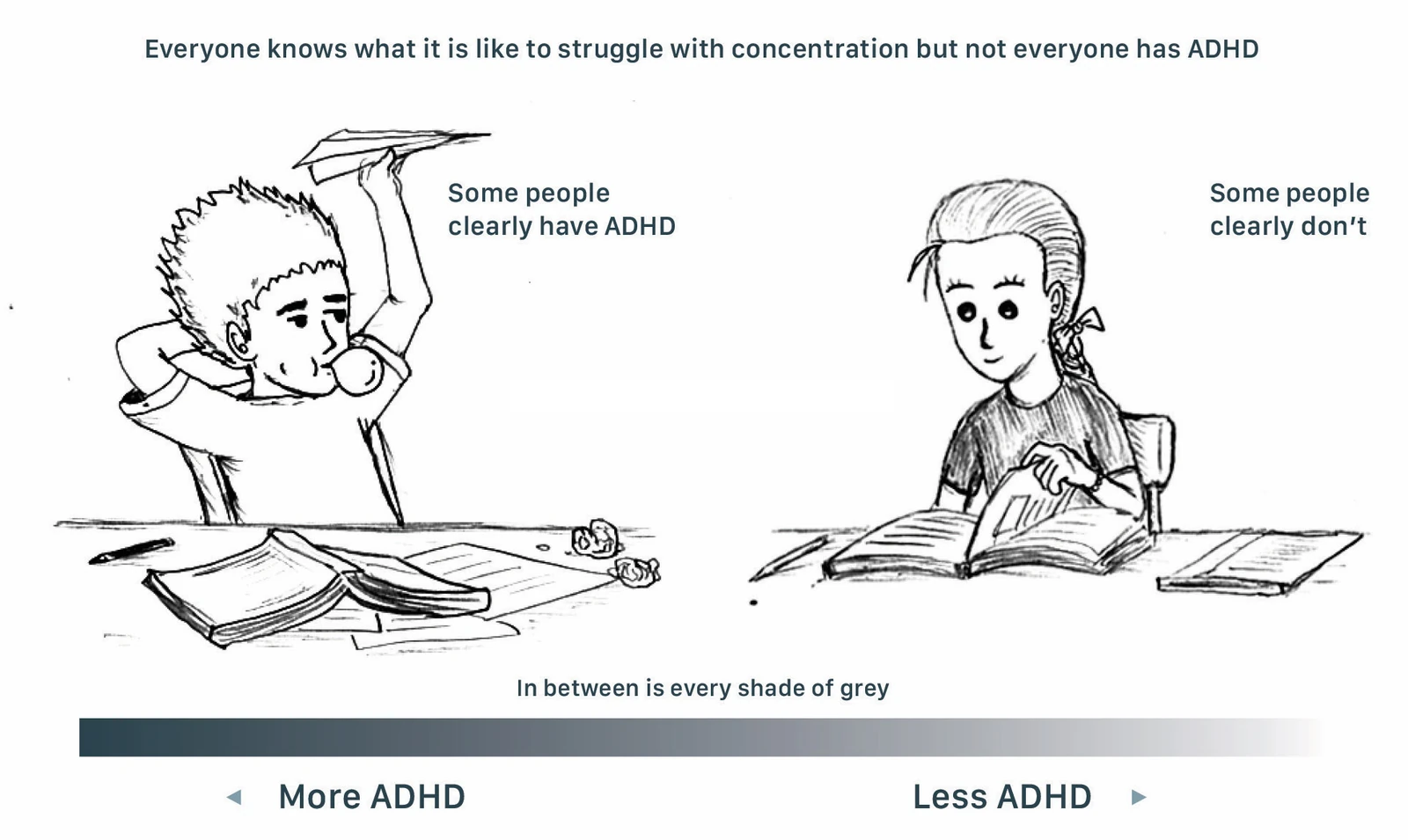
This creates a challenge for diagnosing ADHD, because there is no precise cut-off between those who do and those who do not have ADHD. The same goes for oppositional defiant disorder (ODD). But the positive side of this is that everyone can understand what it feels like to have difficulty concentrating or to find that a task is just too much effort. It also means that having an understanding of ADHD and ODD also helps for understanding people in general. Just as people with ODD may be striving to make their lives feel more rewarding, everyone wants to achieve adequate reward with a manageable level of effort.
Figure 1 shows a range of activities that vary in the amount of effort they require and the level of reward experienced. People with ADHD find it difficult to put in the mental effort. People with ODD who experience little satisfaction from the everyday activities of life would tend to seek tasks that are high in reward. If someone has both ADHD and ODD, for an activity to be worthwhile the level of reward has to be particularly high for the level of effort. However, if the reward is great enough they may be able to make considerable effort.
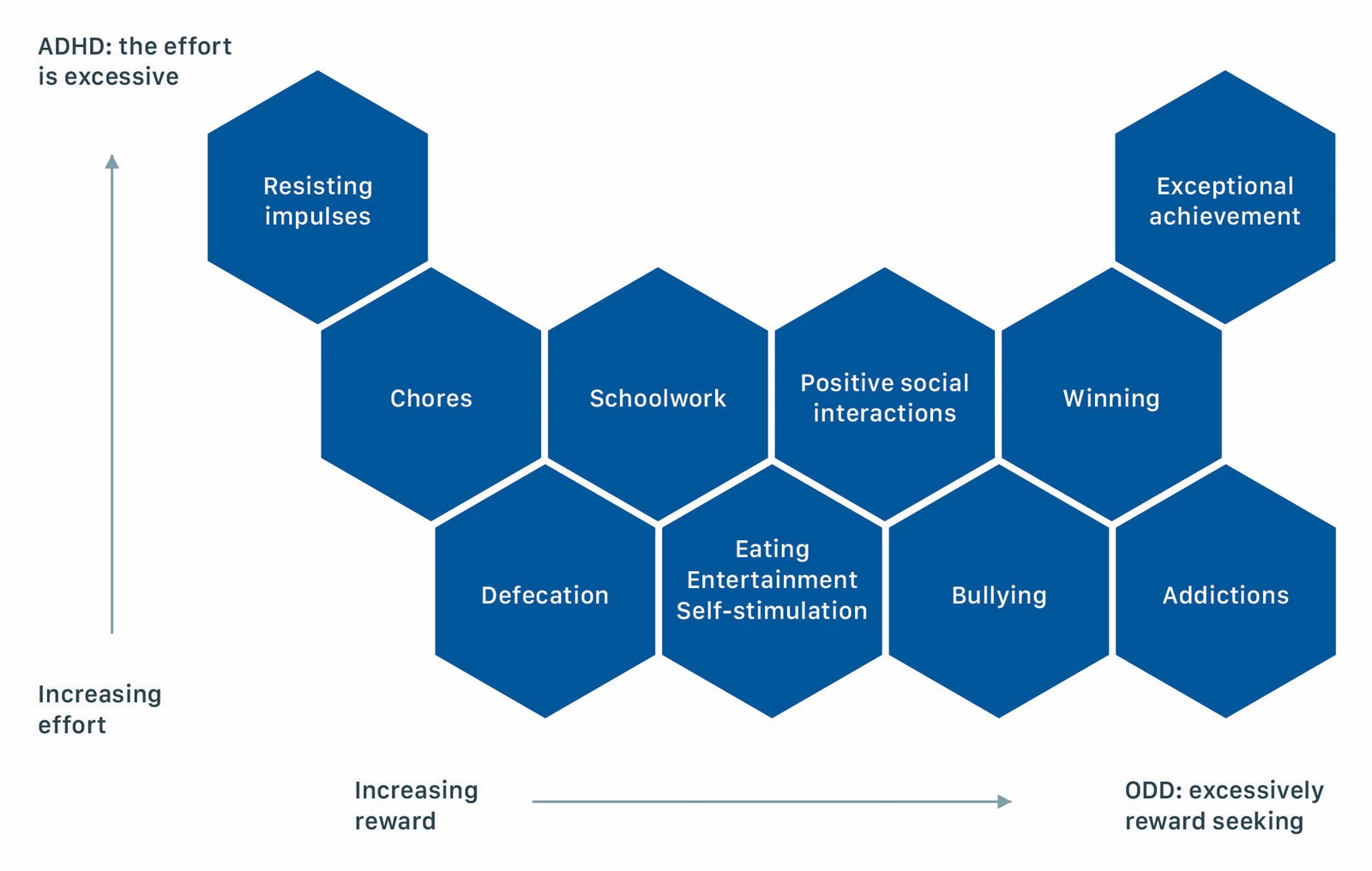
Most people would expect to get most of their reward from their routine everyday tasks, such as their work, talking with their friends and family (positive social interactions), entertainment and bodily functions such as eating. Within the broad categories of chores, schoolwork and social interactions, different activities will vary in their level of interest and difficulty for the individual, with some chores and schoolwork being experienced as more rewarding and less arduous than others.
Some children use competition to increase their motivation, making every activity into a win-lose situation. Such children may be unable to tolerate losing. However, being competitive may be used adaptively to enhance the reward associated with routine tasks or chores, for example a child trying to break their record for how quickly they can get dressed.
The level of effort required for social interaction is often underestimated. Children generally demand a high level of attention from their friends and even though play and conversation are rewarding, a child with ADHD may find the intensity of the mental effort unsustainable. The child may consequently withdraw to a less demanding pastime, perhaps playing alongside their friend. A child may find relaxation from a low-level, repetitive activity, which can lead to an incorrect diagnostic label of autism spectrum disorder. Alternatively, a child with ADHD may be more comfortable playing with a younger or less intellectually demanding child, or an older child who can make allowances or entertain.
If a person’s experience reward is inadequate, they will tend to feel low and dissatisfied, with their anger easily triggered by minor frustrations. They may also be striving for the higher rewards. Some people with reward deficit may be intensely competitive. Those who are intellectually able may strive for exceptional achievement. If they fail, this may lead to hostility towards those who succeed. Alternatively, they may feel better after they find someone to bully, as happens in ODD.
People with ADHD and ODD sometimes find that going to the toilet for defecation is not sufficiently rewarding to be worth the effort, particularly if they also have intellectual disability. Such people may indulge in self-stimulation as this provides reward and is not mentally demanding. Eating is also easy and rewarding, which may explain the recognised association of ODD with obesity. People with ODD are particularly susceptible to addictions to substances such as nicotine or illicit drugs. Conversely, resisting impulses requires substantial effort and is not particularly rewarding. An aggressive and irritable child may therefore have no inclination to resist the impulse to hit a sibling.
With the exception of addiction, the higher rewards depend for their value on social recognition, or an emotional response from one or more other people. Exceptional achievement has more emotional value when it is recognised by other people. However, high achievement generally requires effort and ability. Negative behaviour such as bullying may be easier for those who are less able. Rewards associated with low levels of effort and achievement may be associated with low self-esteem. This could negate some of the reward experienced from activities such as bullying. Attributing blame to the victim may reduce the negative effect on the bully’s self-esteem.
- Most people get most of their reward from positive social interactions, task completion, entertainment and positive bodily functions.
- For people with reward deficiency/ODD, greater rewards are needed to rectify their low mood. The strategies they use for compensating will depend on other personal attributes – for example exceptional achievement is only possible for those with ability.
- Gaining an emotional response from other people is highly rewarding, but negative responses (from bullying) may be easier to organise than positive responses.
- People with severe ADHD/ODD and low ability may find the effort of going to the toilet for defecation is not worthwhile – ADHD has a recognised association with soiling.
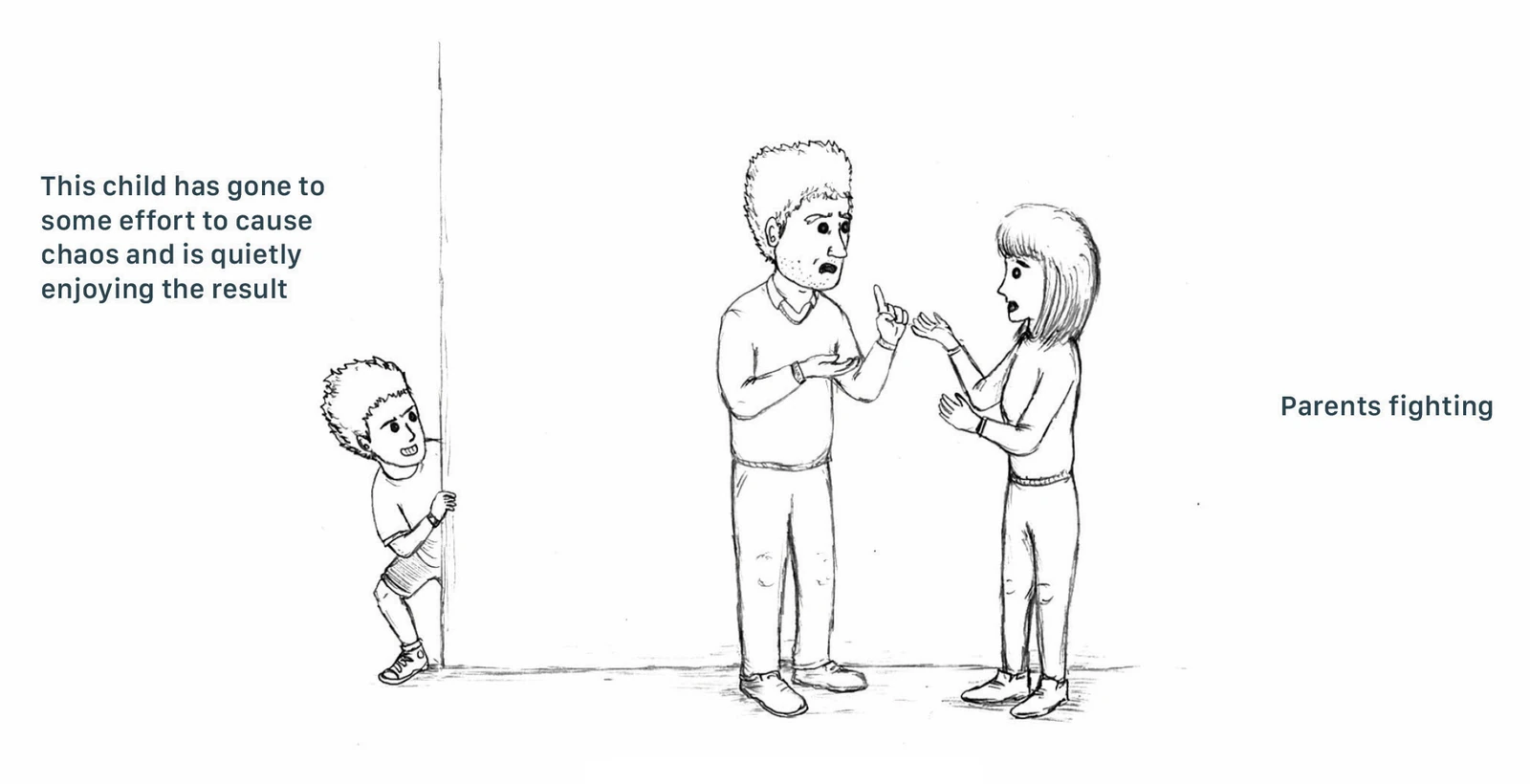
- A person’s mood is a measure of the success of their strategies – a child with ODD may appear happy or satisfied after generating emotional chaos