Introduction
This explanation describes ADHD as a condition in which the mind does not function as efficiently as it should and how this could explain functioning in adulthood. It also describes the The Mental Effort-Reward Imbalances Model (MERIM): this is a way of conceptualising ADHD that emphasises the interaction between mental effort and reward and explains the association between ADHD and oppositional defiant disorder (ODD). Although behavioural and self-regulation strategies may play a valuable role in ADHD, only medication can directly address the neurochemistry.
Executive functioning – the functions of the ‘thinking’ brain
- Reasoning – thinking logically
- Making good decisions
- Short term memory
- Attention span
- Ability to listen and follow instructions
- Controlling impulsive behaviour
These functions are important for achievement
ADHD as a neurodevelopmental disorder associated with executive functioning deficits
ADHD is a neurodevelopmental disorder. This means that in ADHD the brain functions slightly differently. ADHD is strongly inherited and therefore most people with ADHD will be able to think of other people in their family who either have, or might have ADHD. It can often be traced back through the generations although it may not always have been diagnosed, particularly in older people.
It has been shown that many people with ADHD have executive functioning deficits. Executive functions are functions of the ‘thinking’ brain (see box above). These deficits may be identified on formal testing. People with ADHD often develop strategies to get them through their daily routine that compensate for these deficits. This may make their ADHD less obvious to other people but does not change the underlying brain characteristics.
How is ADHD diagnosed?
Although formal testing for executive functioning deficits is possible, such tests are not strictly necessary for making a diagnosis. ADHD is a clinical diagnosis and depends on a person showing the characteristic behaviour to a greater extent than would be expected for a person of their age or developmental level. This behaviour must also be causing problems in their daily functioning. There are 3 main types of symptoms or behavioural characteristics that make up the diagnostic criteria for ADHD. These are inattention, hyperactivity and impulsivity.
Inattention
People with ADHD have more difficulty for tasks that involve sustained concentration, particularly if the task is mentally demanding. If a person with ADHD is going to complete a task, that task should either be short and easy or be sufficiently interesting, enjoyable or rewarding to keep them engaged. People with ADHD may be able to concentrate for a long time on electronic games. These typically do not involve much independent or creative thought and also provide constant stimulation that catches and keeps the attention.
Hyperactivity
Hyperactivity is common in ADHD and is the most easily recognised feature. This restless energy may make it difficult for a person to remain seated for long enough to watch a movie. Hyperactivity may also make a person excessively talkative, or their constant tapping or fidgeting may disturb other people. However, hyperactivity tends to lessen with age. Even though some adults with ADHD are still hyperactive, others may become underactive and unmotivated.
Impulsivity
People with ADHD often have quick reactions, making decisions without having time to stop, think and consider the consequences. This may include overlooking danger and taking unnecessary risks. Impulsive people may lack the patience to wait for their turn or may constantly interrupt. This lack of impulse control can lead to anxiety and low self-esteem as the person may suddenly be in trouble without any prior warning or intent.
The symptoms of ADHD may change over the different stages of life. This means that a hyperactive young child may no longer be hyperactive in adolescence or adulthood and may not even still meet the diagnostic criteria for ADHD. Does this mean that a person can recover from ADHD? Or does it mean that there is something more fundamental about the way that the brain functions in ADHD that is not always captured by the diagnostic criteria?
ADHD and mental efficiency
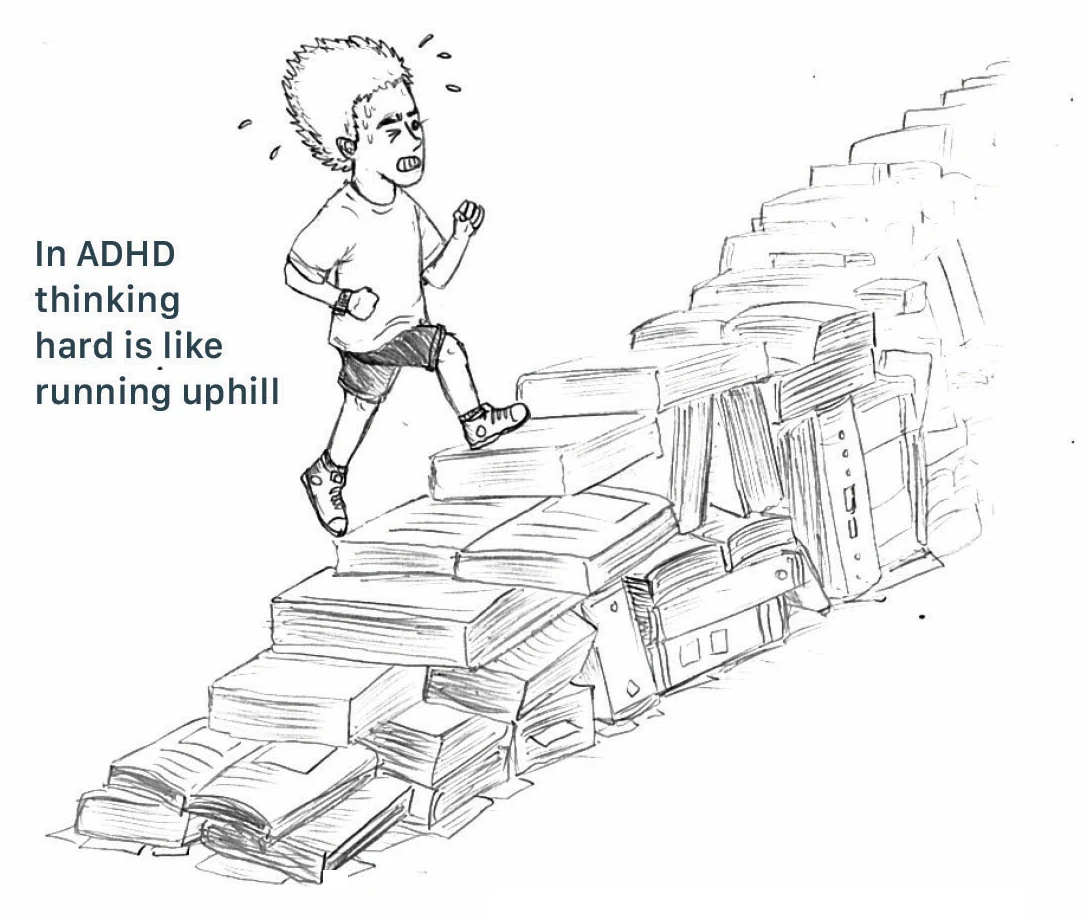
In ADHD the various executive functioning deficits may be considered to have the overall effect of making the brain work less efficiently. This means that the more difficult or high-level mental tasks that involve a lot of thought may require an unmanageable level of effort. This is like a runner who has to run uphill. It is not that running is too difficult for him, but he will tire more quickly than others who are running along level ground. He will either keep going but run more slowly, or he will try and run as fast as the others and then have to stop to rest. It is like this for mental tasks for people with ADHD. A task may not be beyond their ability but it requires a disproportionate – even a super-human – level of effort. This makes it far more difficult for a person with ADHD to achieve their potential.
ADHD particularly affects the high-order thought processes. These include making difficult decisions when the best choice is not obvious, or working out the answer to a problem.
If high-order thinking requires a disproportionate level of effort, a person with ADHD who has to think hard will quickly tire. One way to picture this is to imagine the brain as having a battery that is running out of charge.
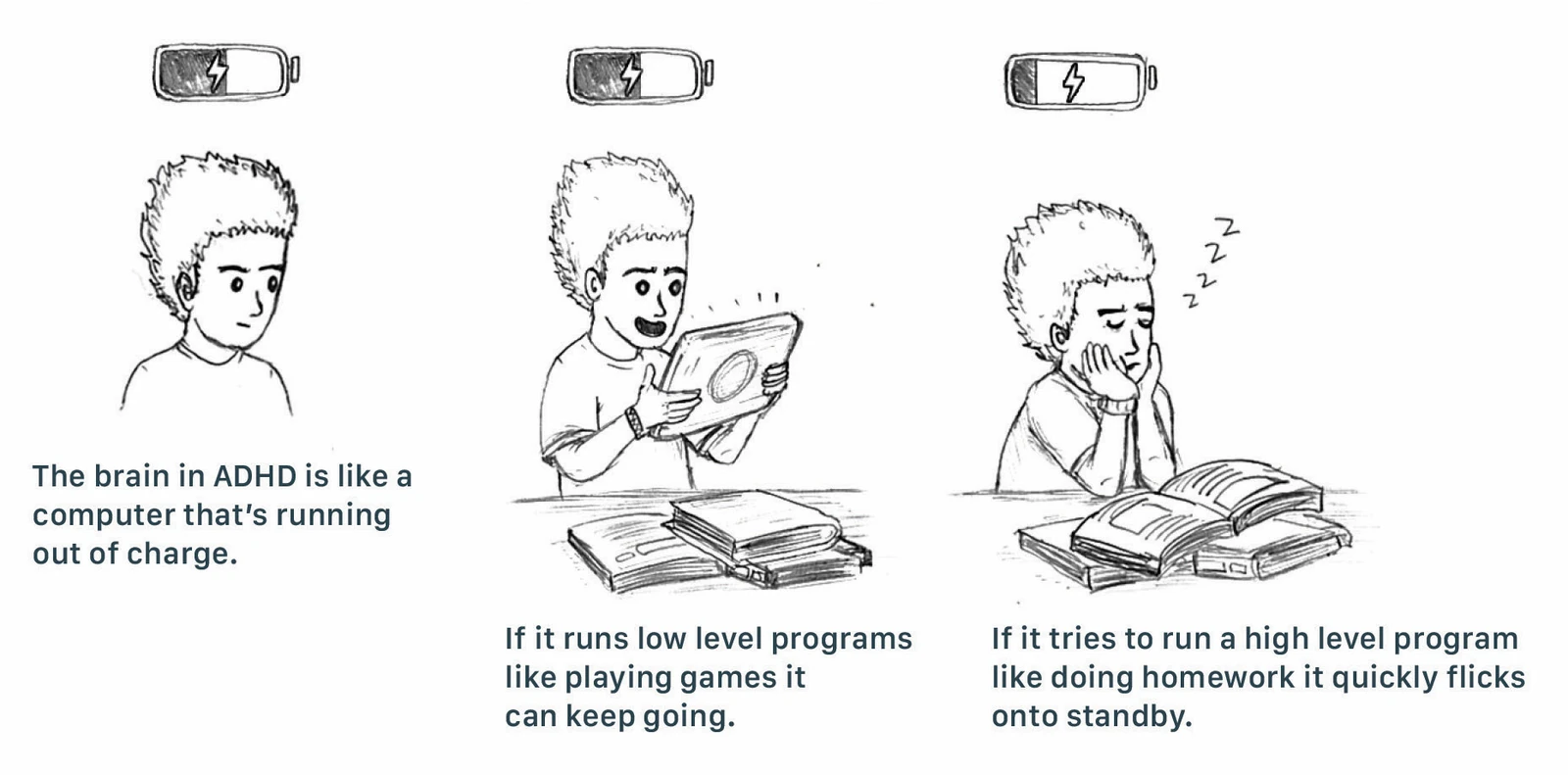
| What might happen if the brain’s ‘battery power’ is critically low? | How might this appear in a person with ADHD? |
|---|---|
| It may keep flicking on and off | Brief lapses in attention |
| It may keep running but not at full capacity | Person is partially concentrating but is not taking everything in |
| It may work more and more slowly | Increasing effort to keep working on a task |
| It may stop working | Daydreaming |
Losing ‘brain power’
As the reserves of ‘brain power’ are used up, the following may happen:
- The level of attention available for the task reduces to under 50%
- The mind thinks more slowly
- Tasks appear more boring
- It requires an ever-increasing effort to keep going on a task
- Enjoyable distractions become more attractive
- Negative distractions (like noises or people talking) become more annoying
- Information is processed less efficiently
- Information is easily forgotten
- Lapses in attention become longer and more frequent
- It becomes more and more difficult to get started again
- Tasks are left unfinished
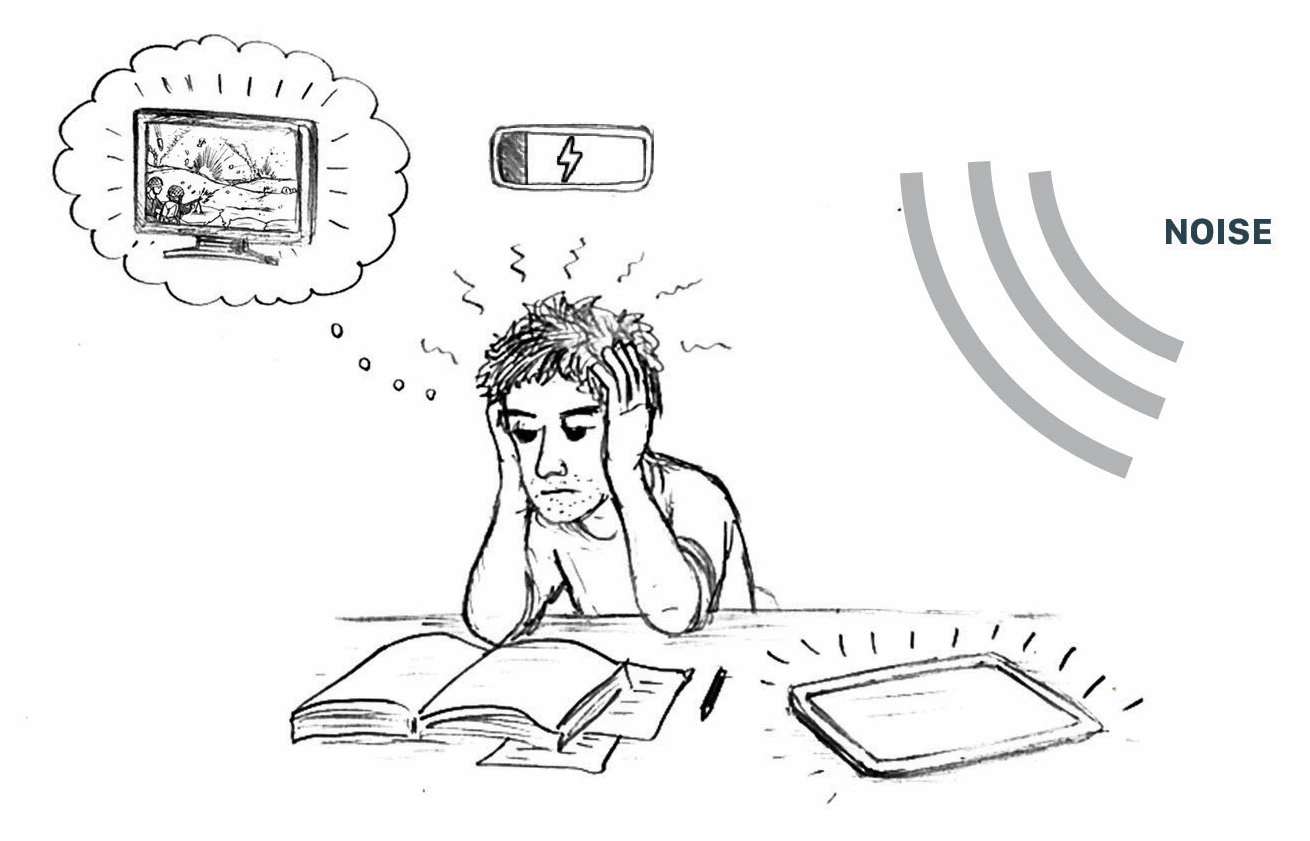
A person whose brain’s ‘battery power’ or ‘brain power’ is critically low may learn to adapt in ways that maximise functioning. This may involve conserving power when possible and also ramping up the pressures to keep the brain going when really necessary.
Conserving ‘brain power’ and taking ‘mental short cuts’
Avoiding unnecessary effort and conserving ‘brain power’ is a normal part of everyday life which helps people to function efficiently. This goes for people with or without ADHD. A daily routine involves a series of tasks. If a person’s job involves tasks that require intense concentration, afterwards he or she may feel the need to take a rest or to move on to doing something easier. Similarly a student who continues studying for too long without taking breaks may become less efficient. This mental fatigue is experienced much sooner in people with ADHD and it may be present before they even start a task.
A person’s brain is constantly taking in, processing and analysing external data from their surroundings. This requires effort – or ‘brain power’. Different types of data may be easier or harder to process. Visual information may be easier than language-based data, and listening is usually easier than reading. It makes economic sense for a person with ADHD to conserve their precious ‘brain power’ so that they can keep their brain running for as long as possible. One way of doing this is to get the information from their pre-existing bank of knowledge, as this avoids the need for concentrating and processing new information. This may be considered to be taking a ‘mental short cut’.
Carrying out a task with the minimum level of ‘brain power’
Easy or repetitive tasks that require little active thought, or just involve responding to familiar situations will conserve ‘brain power’. However, if a person is not using their brain to its full capacity, this may mean that they fail to notice the additional tasks that need to be done and may therefore lack initiative at work. They may also find it difficult to learn new tasks, as this requires a higher level of concentration.
A common example of a daily routine that conserves ‘brain power’ is the person (with or without ADHD) who says that their car ‘knows’ the way home from work. The higher order thinking involved in planning the route for this journey is unnecessary. Attention is only needed for the easier tasks of responding to the traffic lights and to the other road users. ‘Brain power’ is conserved, allowing the brain to take a rest, or to divert to thinking about other things or concentrating on a radio program. The downside of this is that changes to the normal routine may easily be overlooked, such as making a necessary detour to the shop. However, in ADHD when the person’s ‘brain power’ is critically low, these conservation strategies are a vital part of keeping going. As a result, such oversights are much more common.
Predictable routine
Having a regular routine is a good way of conserving mental effort. If you know that as soon as you finish task A it is time to start on task B, you do not have to put any effort into thinking of what to do next. A person with ADHD may therefore manage better with a routine.
‘Mental short cuts’
Inadequate listening
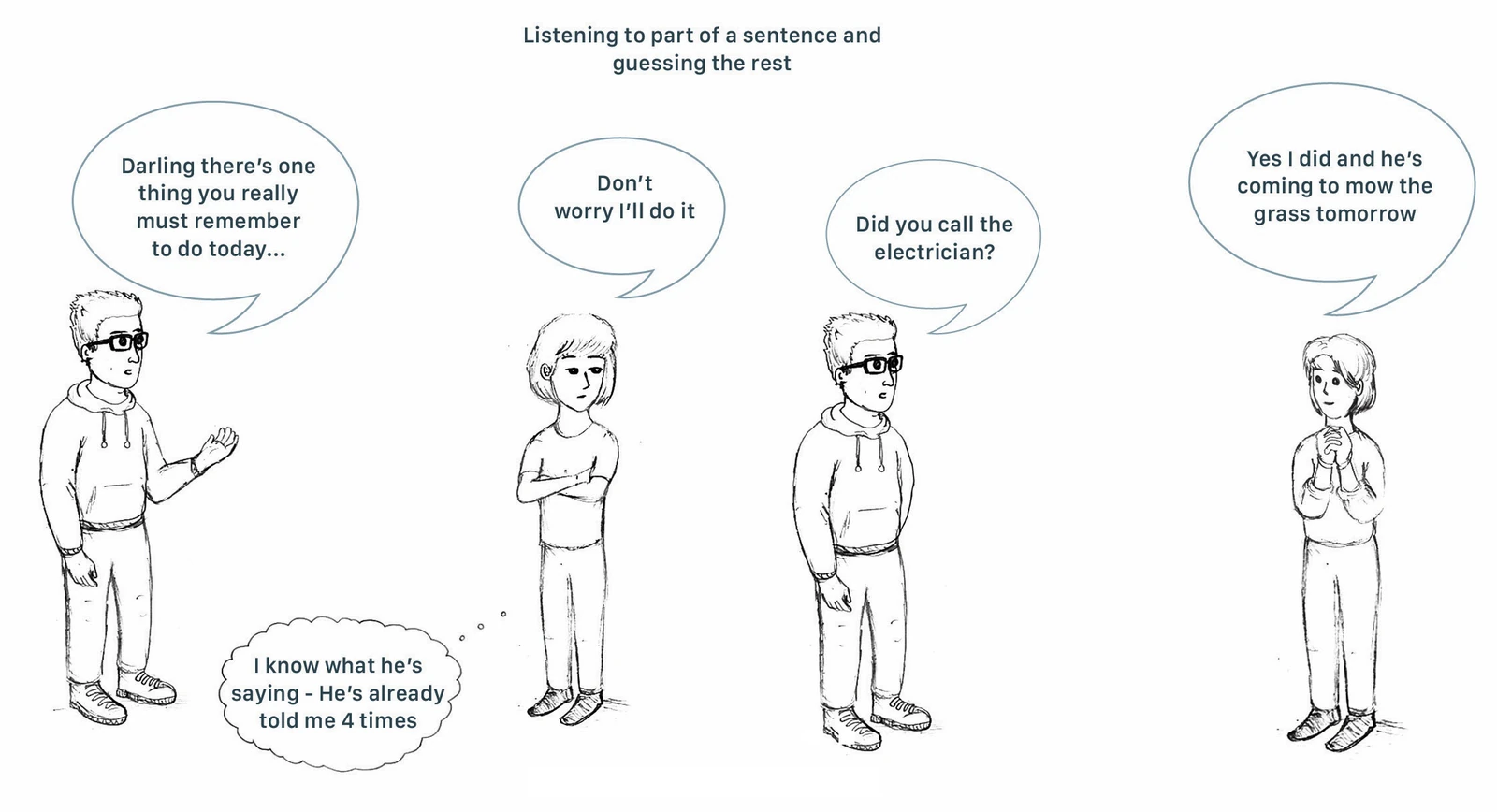
Inadequate listening is probably the commonest type of ‘mental short cut’. This may involve listening to only part of a sentence and guessing the rest, or guessing the entire sentence from the situation and tone of voice. This strategy can work well if an instruction is being repeated multiple times, or if the routine is always the same. For example, a child may know that at a particular time in the morning, when a parent shouts out an instruction it is time to go and put their shoes on. However, if the information presented is new or different from usual, it may result in the wrong task being done, leading to inefficiency and frustration.
Doing the bare minimum
If a task has to be done, a person with ADHD may look for ways of doing it as quickly and easily as possible. Therefore a student writing an essay with a word-count may aim to write only just enough words, keeping each sentence as short as possible. Similarly an adult may have low standards of work, perhaps leaving off the finishing touches or the cleaning up afterwards. Often the last part is rushed, just to get the job finished.
Emotional decision making
Making a good decision often involves high-order thinking and planning. Alternatively a decision may be made quickly and easily, based on emotion. Emotional decision making therefore conserves mental effort and may be considered a ‘mental short cut’ (see Decision making below).
Conserving effort by talking instead of listening
Some people with ADHD are excessively talkative. Talking too much may be part of being hyperactive. However, for many people with ADHD, talking is easier than listening, particularly if they can talk without putting much thought into what they are saying. The downside of this is that their speech may be boring, confused or repetitive. It may also prevent meaningful conversation involving talking, listening and responding to another person. Therefore a person with ADHD may have great difficulty socialising and maintaining friendships.
Procrastination
Procrastination means putting off tasks that require effort. People with ADHD are particularly susceptible to procrastination because they may easily become overwhelmed at the amount of effort that a task will take. This is a bit like a person looking at a steep mountain and realising that they will never be able to climb up and reach the top. Although procrastination may look like laziness, the person with ADHD may in fact be a making a realistic assessment of their reserves of ‘brain power’. A person at work who procrastinates may choose to do the easiest or more interesting tasks first because these appear more achievable. These tasks may take a long time as he or she tries to put off doing the harder tasks for as long as possible. By the time the easy tasks are done, the person may have run out of time, or run out of ‘brain power’, so that the more mentally demanding tasks never get done. This makes the person an inefficient worker.
Keeping the brain functioning
If a person with ADHD is going to complete a task, that task has to either be sufficiently short, easy or rewarding for them to be able to sustain their effort.
| Tasks that can be done if you have ADHD | Tasks that can’t be done if you have ADHD |
|---|---|
| Short | Long |
| Easy | Difficult |
| Interesting | Boring |
In practice this is a balance which also depends on a person’s natural ability. For example, a bright primary school child with ADHD may find the schoolwork easy and be able to complete it quickly and within a limited attention span. A child who has a particular ability in maths may be happy to do their maths but may find the writing tasks boring and arduous.
Getting up, getting dressed and ready for school or work might not appear to require very much mental effort but for some people with ADHD, even getting through these mundane tasks of life can be difficult.
Maintaining motivation using a reward
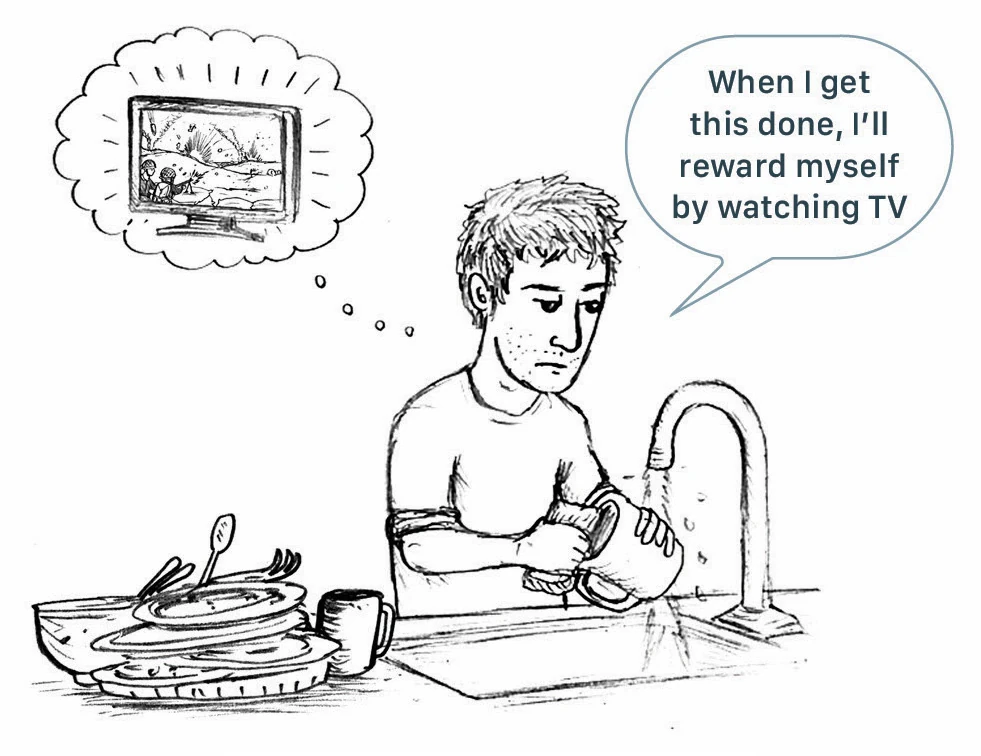
Sometimes it helps to structure the day and to plan to have certain tasks completed by particular times, followed by a reward. For example, a person might plan to have each task completed by a particular time and if successful, to follow this with a reward such as watching a television show. This also gives the brain a bit of time to recover before attempting the next task.
Using negative consequences to increase motivation
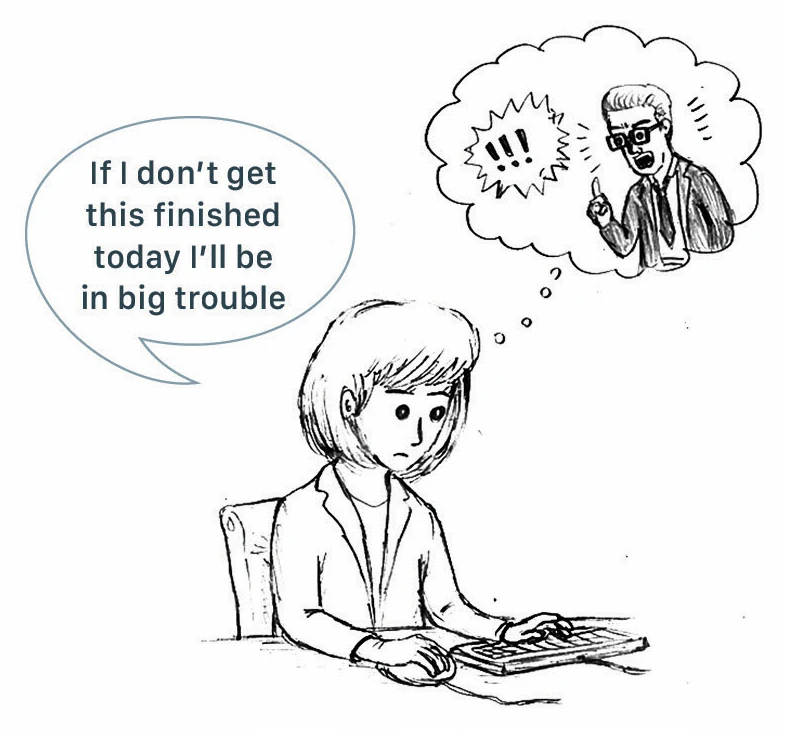
Some people find motivation very difficult without external structure, such as a job that has deadlines. A person may actually need the panic of an imminent deadline with negative consequences to be able to get on with concentrating on a task. If a person with ADHD also suffers from anxiety, the anxiety may help the person to put more effort into a task as they worry about what may happen if they do not get it done.
Maintaining attention by increasing the stimulation
If someone has had an attention lapse they may find it very difficult to recover their line of thought. These lapses interfere with planning and getting through the tasks of the day. Similarly if someone gets distracted and leaves a task incomplete, it requires an effort to think back to try to recall what they were doing previously. Sometimes they may forget altogether and keep leaving tasks unfinished.
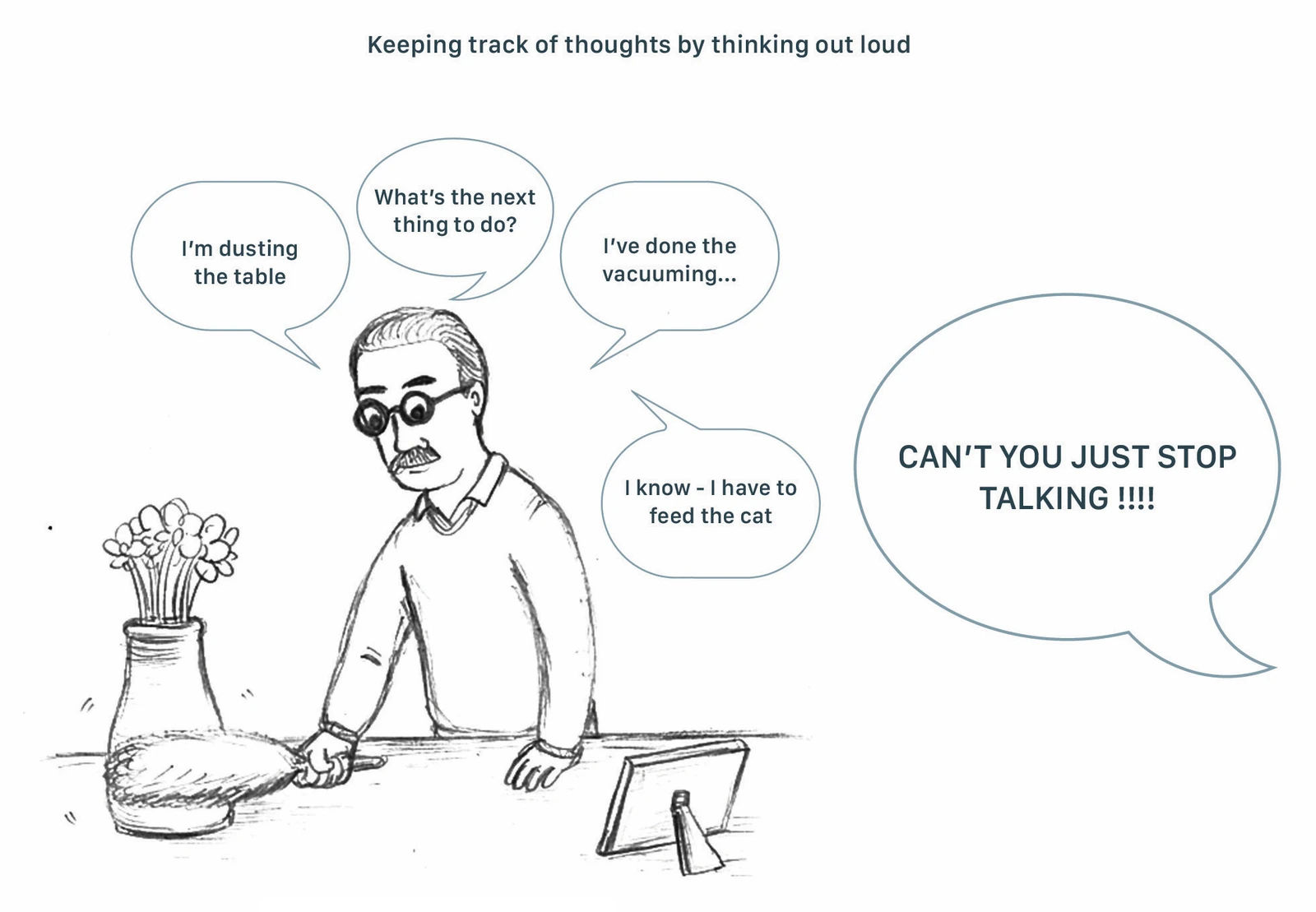
Increasing the level of stimulation may help a person with ADHD sustain their attention. Sometimes the stimulation of music playing may help a person to stay alert. Some people find that speaking their thoughts makes it easier to keep track of them. They may therefore keep up a constant commentary about what they are doing and planning to do next. Although it may help a person with ADHD if they are able to hear their thoughts, this may be a nuisance to other people.
Decision making
Decisions may be rational, emotional, or a combination of both. Making a rational decision involves weighing up the value of the different possible choices. Rational decision-making may also involve taking a long-term view of the decision and its effects on future plans. A decision based on emotion is usually quicker and easier to make and will tend to favour choices that give immediate pleasure. A rational decision may have an emotional component, but this is only comes into play for helping to decide between the possible rational options, or when the rational and the emotional choices coincide. In rational decision making the rational mind therefore takes precedence over the emotions.
A person who is saving up for a car may need a new pair of shoes. A rational decision would be to choose the cheaper pair that will serve the purpose. An emotional decision would be to choose the really nice pair of shoes that is more than double the price. To make a rational decision involves high-order thinking and prioritising as well as exerting mental control over the emotions. This can be particularly difficult for a person with ADHD. However, making a quick decision based on emotion is far easier as it avoids the need to think. In practice, most decisions will have a rational and an emotional component. Therefore if there are two pairs of shoes that look equally sturdy, it could be reasonable to allow emotion to select the one that is slightly more expensive but looks better. However, a person with ADHD might simply go with the emotion and choose the most expensive shoes, avoiding the cognitive decision-making process, or might even get side-tracked into spending the money on something unnecessary and completely different.
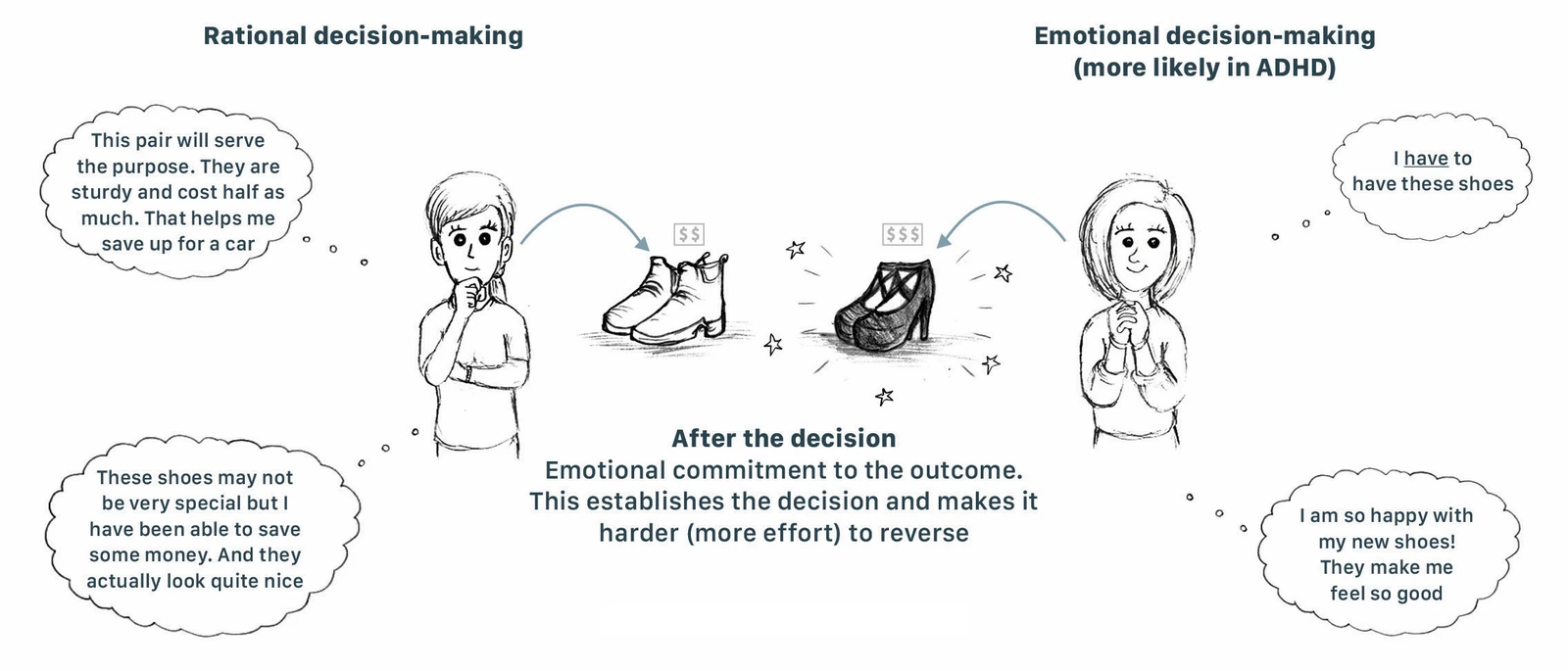
This example of emotional decision-making shows a person making a choice that gives immediate, short-term enjoyment, rather than thinking and saving up for a different, delayed, longer-term goal. Decisions which are based on emotion would look impulsive, as they are made quickly and without taking all the consequences into consideration.
After making a decision, a person would want to feel happy with their choice. They may therefore reinforce to themselves why this was the better choice. The person who has made the emotional decision and chosen the impractical, expensive shoes might feel that they had ‘fallen in love’ with the shoes and could not have made any other choice. The person who has chosen the cheaper shoes would look at them to find their positive attributes. After making a decision, a person may resist re-considering that decision, particularly if the decision was made with difficulty or the person has a high level of emotional commitment to the decision. To reconsider or to go back on the decision might involve considerable mental effort and therefore be particularly difficult for a person with ADHD. The person may therefore get irritated if their partner suggests that the expensive shoes should be returned and exchanged for the cheaper shoes.
Living with ADHD across the lifespan
ADHD can be milder or more severe. People with more severe ADHD are likely to run into problems at an earlier stage of life. People with milder ADHD and people who are better able to adapt or learn strategies that help them to cope may be diagnosed later or not at all. ADHD is being increasingly recognised in the elderly, when the aging process not only exacerbates the ADHD but also erodes a person’s ability to compensate.
At any age, if a person is not achieving their potential it is important to consider whether this might be due to ADHD. The later a person is diagnosed and treated, the more they are likely to regret the years they have spent struggling and under-performing.
ADHD in childhood
A hyperactive child who is incapable of sitting down and concentrating for more than a few minutes will easily be diagnosed with ADHD. A bright child with ADHD may have no difficulty achieving at school during the early years. However, as the work becomes more demanding in high school, intellectual ability by itself may no longer be sufficient, and if the child is unable to concentrate adequately in class and study consistently their grades may decline. People with ADHD who are exceptionally intelligent and ambitious may find that their ADHD only starts to hold them back once they reach university.
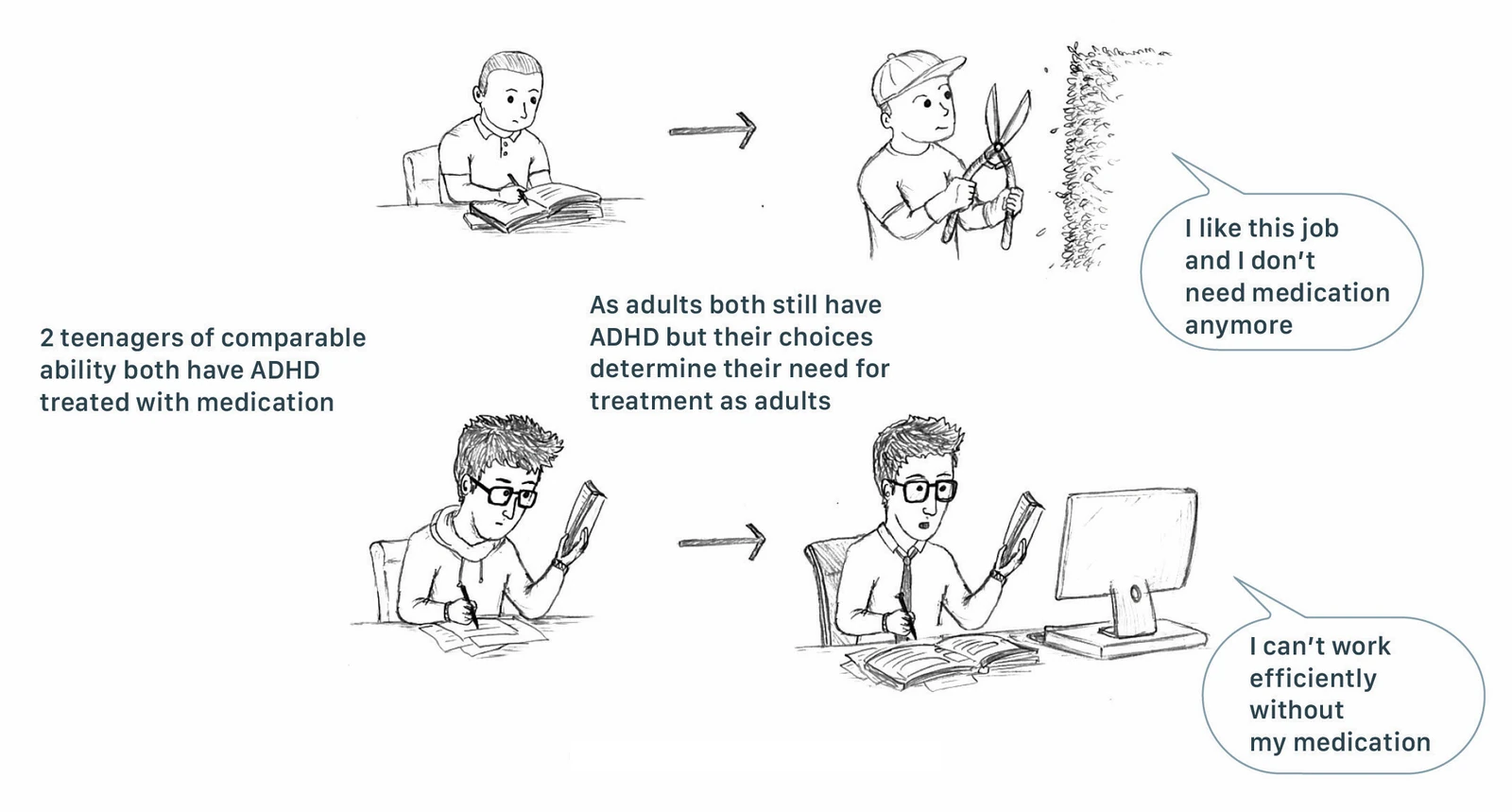
As children mature they usually develop more control over their behaviour and this may reduce their reliance on medication. For example a young hyperactive child may generate so much stress in the family that he or she may need medication every day. As the child matures the hyperactivity may start to settle and medication may only be needed for school. School is often the most difficult stage of life for a person with ADHD. This is because schoolwork involves prolonged periods of concentration and many of the tasks may not be sufficiently interesting. Once a person is no longer studying they may be able to cease medication.
ADHD in adulthood
ADHD used to be considered a condition of childhood, with most people outgrowing their ADHD as they approached adult life. This may be because once they leave school a person has more freedom to choose an occupation that matches their interests and abilities. However, if high-order thinking is unsustainable, they might to choose a job that requires less training or involves tasks that may be accomplished quickly or easily. They might leave the higher-order thinking to their boss who gives them instructions.
ADHD is more often diagnosed in boys than girls, although the numbers are becoming more equal as more inattentive girls are being recognised. However, the years of under-recognition of ADHD in girls means that are substantial numbers of women whose ADHD was missed while they were growing up. Life as a mother in charge of a family usually involves a lot of complex organisation, from running the household and managing the family budget and paying the bills, to organising and remembering all the children’s school, recreational and social commitments. Having a job, being a single parent, or having a child with medical problems or ADHD adds to the difficulties. A woman with ADHD is likely to have more problems coping with all the complexities of life and may develop anxiety or depression.
It is important to recognise and treat ADHD, so that people who are struggling can receive the help they need to achieve their goals in life. A person’s goals should determine the level of function that they need from their brain, not vice versa. Therefore the young man in the top picture above goes into landscaping because this is what he wants to do, not because his poor concentration prevented him from getting the marks he needed for studying engineering. He is able to relax part of his brain and can still do a good job of pruning the hedge. He may be more creative when he is not on medication. The young man with the desk job has to concentrate harder and more consistently. He needs his brain to function at full capacity for the whole day, therefore he continues to take medication.
ADHD in the elderly
The executive functioning deficits associated with ADHD are lifelong. With maturity people often become better at developing strategies to help them to function. However, the physical and mental decline that happens in old age affects memory and the high-order thought processes that are already affected by ADHD. People become less energetic, less motivated and less able to carry out complex tasks. Difficulties with attention may be compounded by worsening vision and the accompanying necessity of keeping track of glasses. Deafness may affect communication: a person who has increasing trouble listening and understanding may adapt by talking excessively, leaving less time for the more difficult task of listening. Decision making becomes more difficult and information and instructions are more easily forgotten. As a person ages, they become less able to put mental effort into managing their ADHD. A person with ADHD may have developed good strategies for remembering the tasks of the day, perhaps with lists or using a calendar or diary. However, declining mental functioning not only adds to the problems associated with ADHD, but also affects a person’s coping mechanisms. Sometimes ADHD may only become apparent in a person following the illness or death of their partner, who up until then had been doing all the organising and decision-making.
An older person is highly unlikely to have been diagnosed with ADHD in childhood. However, as ADHD is a common condition that is lifelong, it is also likely to be common in old age, particularly when there is ADHD in the family. Older people may respond well to treatment, therefore it is important not to overlook ADHD in the elderly.
Oppositional defiant disorder (ODD) / antisocial personality disorder
Oppositional defiant disorder (ODD) is very frequently associated with ADHD in children. The same is also true in adults, except that ODD is more often called antisocial personality disorder, a condition associated with disregard for the rights of others. However, for the sake of continuity with the childhood disorder, in this document we will be using the term ODD rather than antisocial personality disorder.
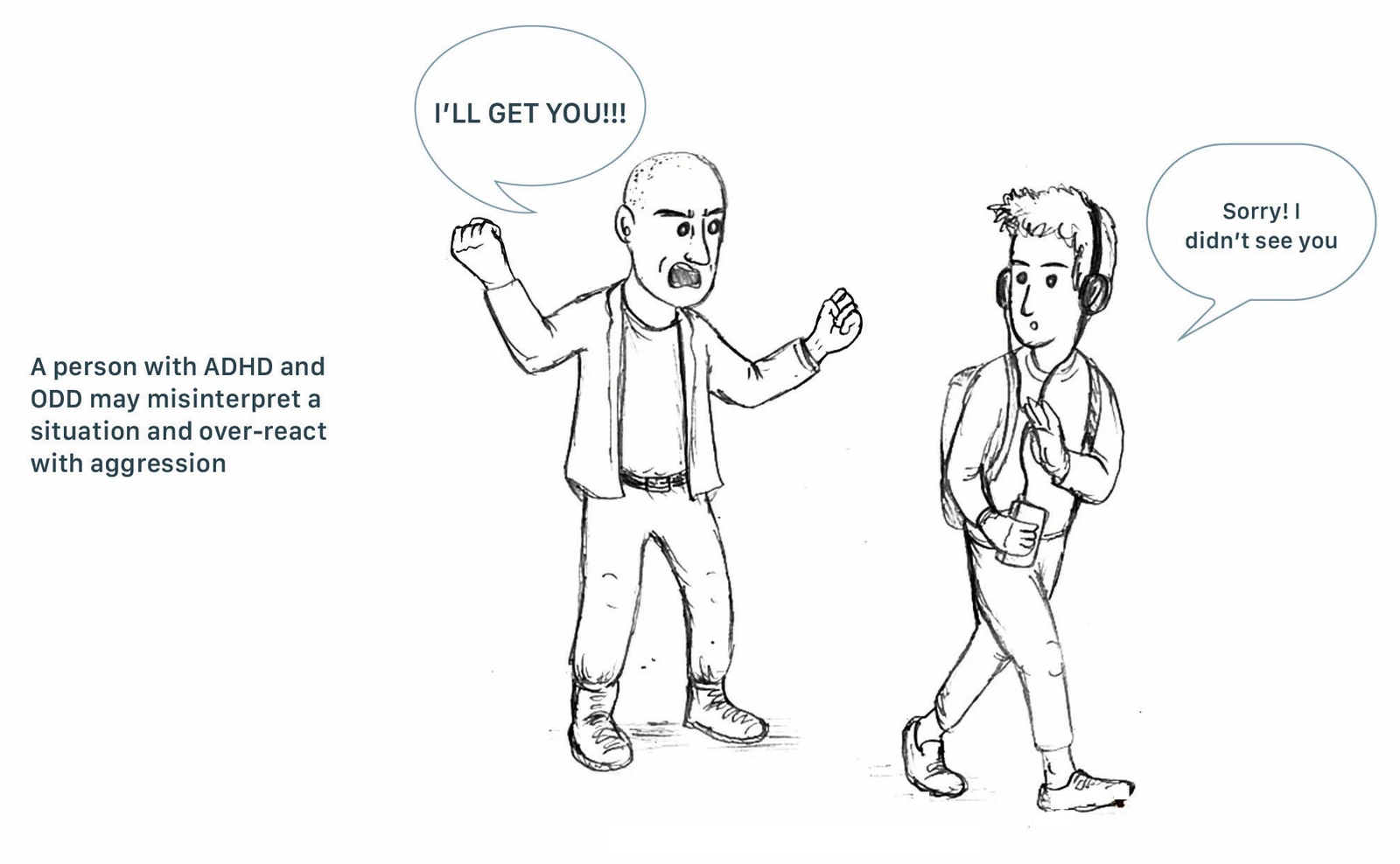
People with ODD typically overreact with anger in response to minor frustration. The lack of control over impulsive behaviour in ADHD becomes even worse when associated with anger. A person with ODD may incorrectly interpret another person’s actions as hostile and impulsively over-react with aggression. Therefore people with ODD are at greater risk of committing violent crime.
ODD is also associated with deliberately annoying people and sometimes with planned acts of spite. This can cause massive problems within the family.
ODD is often associated with a negative attitude and a tendency to blame other people and deny that they are at fault. People with ODD are argumentative and may oppose authority and appear negative in their mood and outlook. This can lead to a lot of problems at work.
Mental Effort-Reward Imbalances Model (MERIM): Why is do people with ADHD so often have ODD as well?
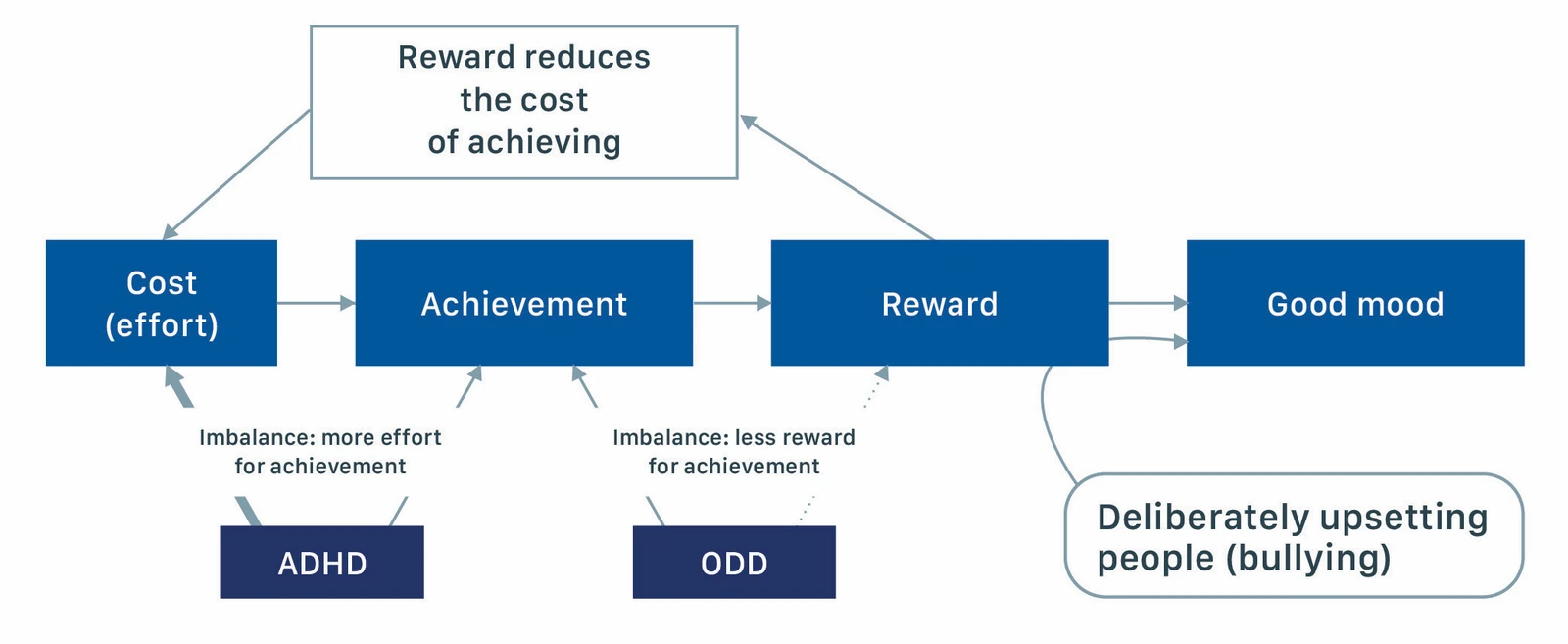
The most fundamental problem in ADHD is the difficulty with concentrating sufficiently to get the necessary tasks finished. This can be thought of as mental inefficiency, with everyday tasks requiring a disproportional effort. Getting through the daily routine involves a constant stream of tasks that all require some mental effort. Successfully finishing these tasks gives a series of achievements. Although most achievements are small, they are each associated with the satisfaction of task completion – the feeling of a job done well. These small feelings of success all help to sustain a stable and happy mood. Therefore, for example, you get up in the morning, you put some effort into getting dressed and ready to go. You look presentable in your clothes. You have achieved and you feel good about yourself and ready to put further effort into the next challenge. Achievement therefore involves some level of effort and is associated with a feeling of satisfaction (reward) which contributes to a good mood and a readiness to attempt the next task. Good mood is important for normal functioning. People who are fortunate enough to have a happy disposition are generally well-liked and tend to have better emotional, psychological and social well-being, which means better physical health and fewer days off work. The cycle of achievement, reward, good mood and further achievement is represented in Figure 1.
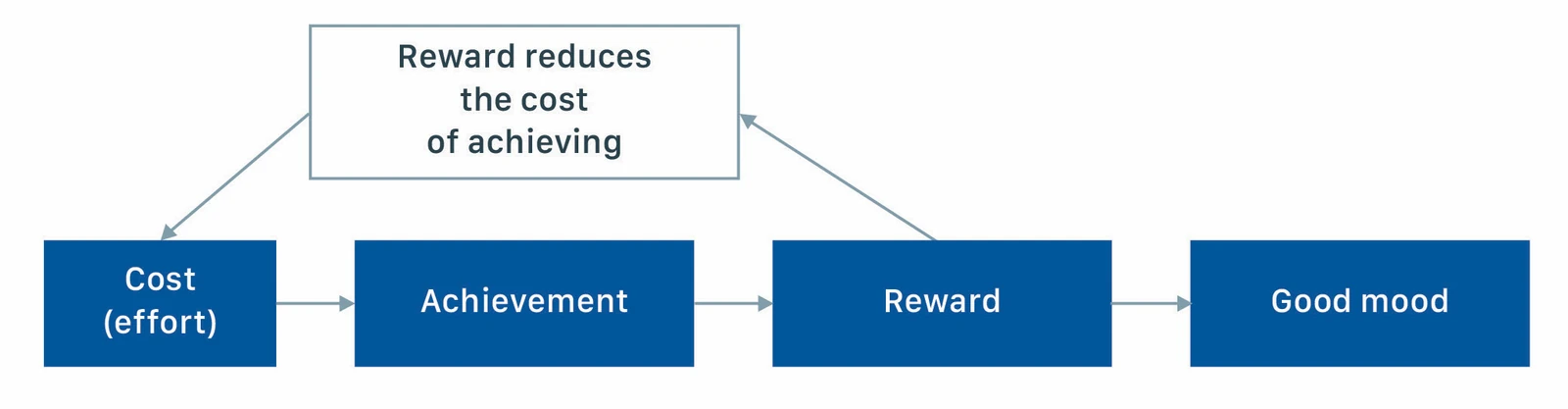
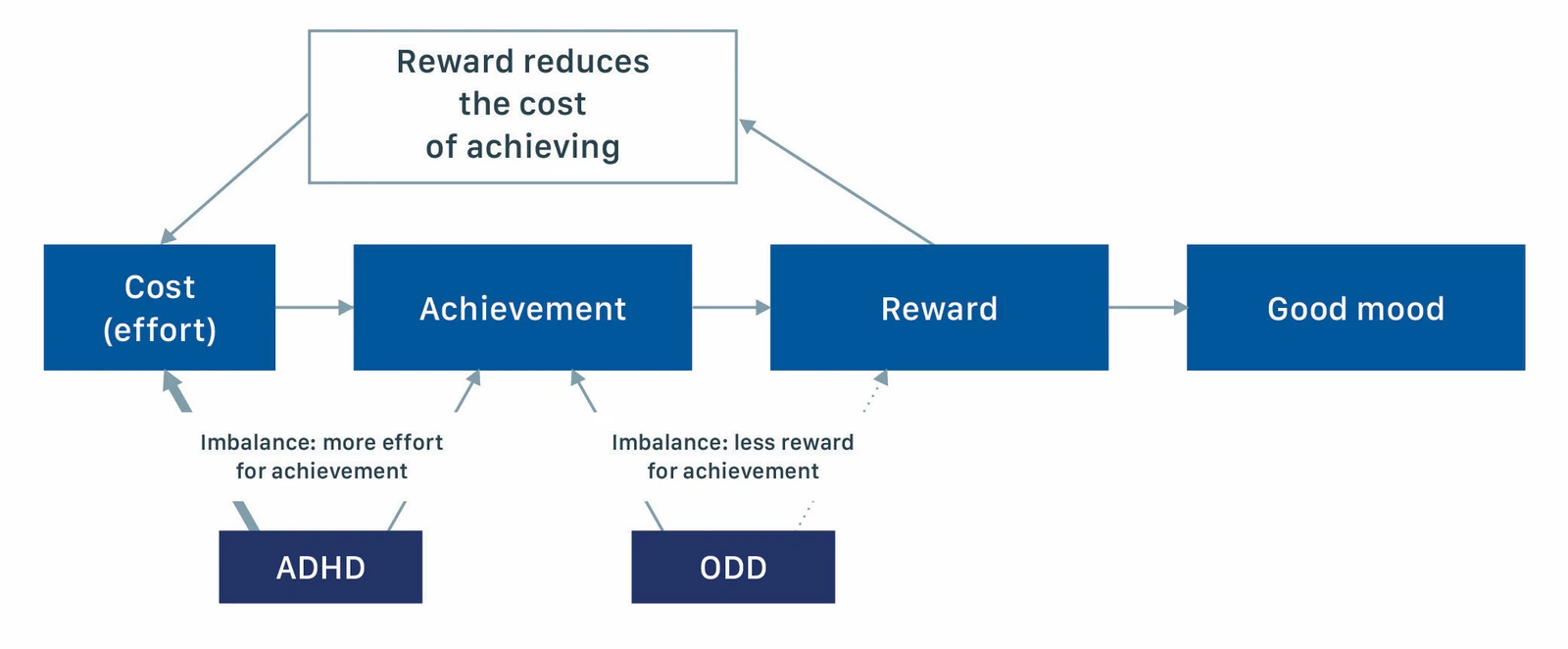
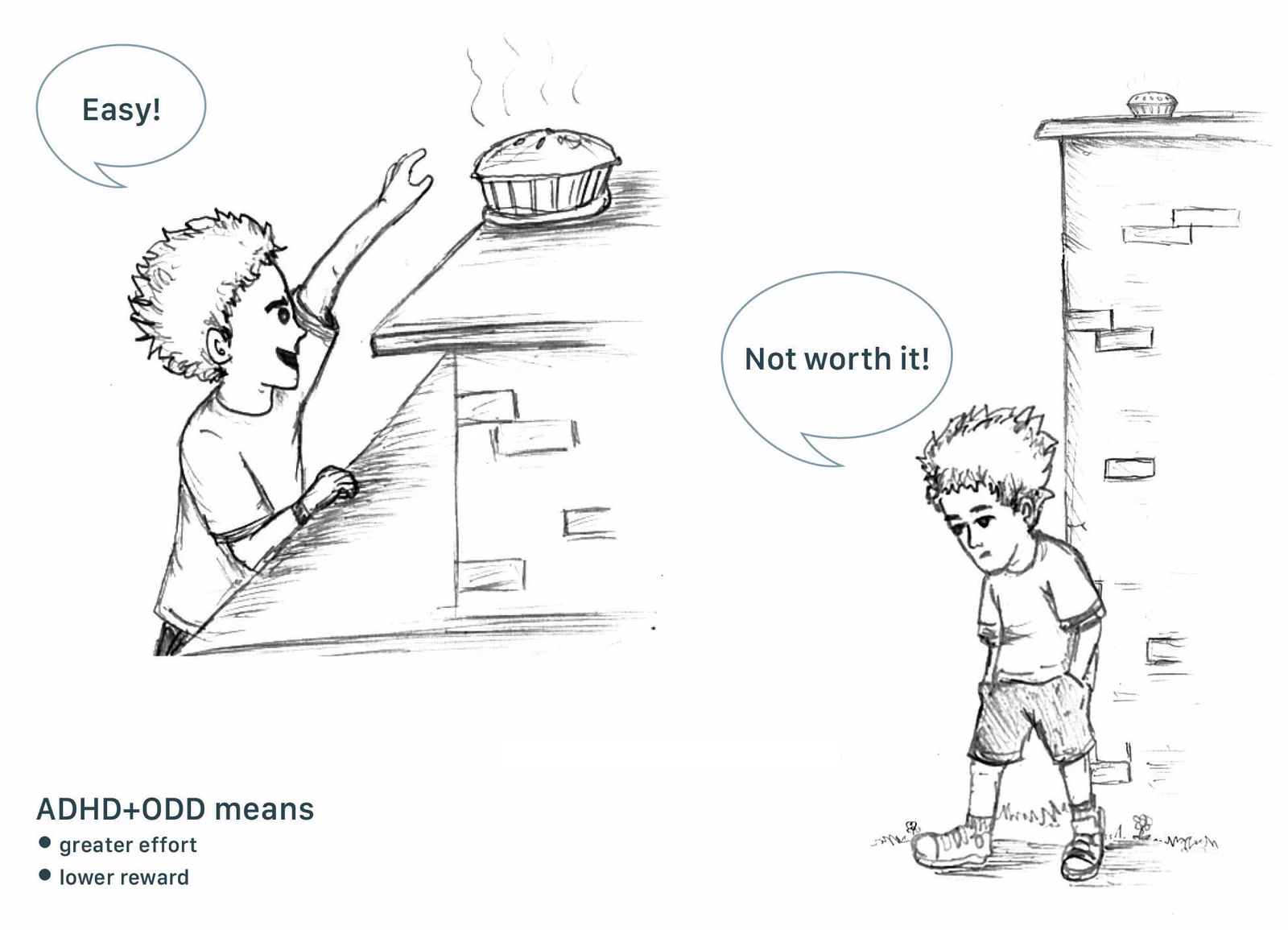
In ADHD the pathway shown in Figure 1 does not work as effectively as it should. There are two places where there can be problems. The first is if the cost or effort of concentrating well enough to achieve is too great, as occurs in ADHD. The second is if a person does not experience enough satisfaction to make the task worthwhile. This is what happens in ODD. Therefore people with a combination of ADHD and ODD find achievement doubly difficult. The lower level of successful task completion is associated with lower mood. This is illustrated by the Mental Effort-Reward Imbalances Model (MERIM), shown in Figure 2. and also illustrated in the picture below.
Inadequate experience of reward leading to symptoms of ODD
Getting pleasure from the little things in life is important as this helps to maintain a good mood and amicable outlook. However, if the subjective experience of reward is low, a person is likely to feel negative and dissatisfied. This low mood may lead to poor motivation – the feeling that a task is not worth the effort.
People who have deficits in their experience of reward may feel miserable and moody – their anger is nearer the surface. They may also compensate by seeking activities that are more highly rewarding or that give reward for less effort. These rewarding activities make them feel happier. In ODD the reward-seeking behaviour is maladaptive and destructive.
When people communicate they have an effect on eachother. In a conversation, you would feel you had communicated successfully if the other person appeared interested. This might make you feel good about yourself. Making a person feel happy is even more rewarding. But it is not always easy to tell a good joke that makes people laugh, or give someone a pleasant surprise that makes them happy. It is often easier to affect someone’s emotions by irritating, hurting or upsetting them. This is what happens in ODD.
People with ODD are often argumentative, may deliberately annoy other people and may be spiteful or vindictive. Although these strategies might not appear to be rewarding or enjoyable, it is difficult to imagine a person being deliberately spiteful if this were not pleasurable in some way. A playground bully would not be a bully if he or she did not enjoy bullying.
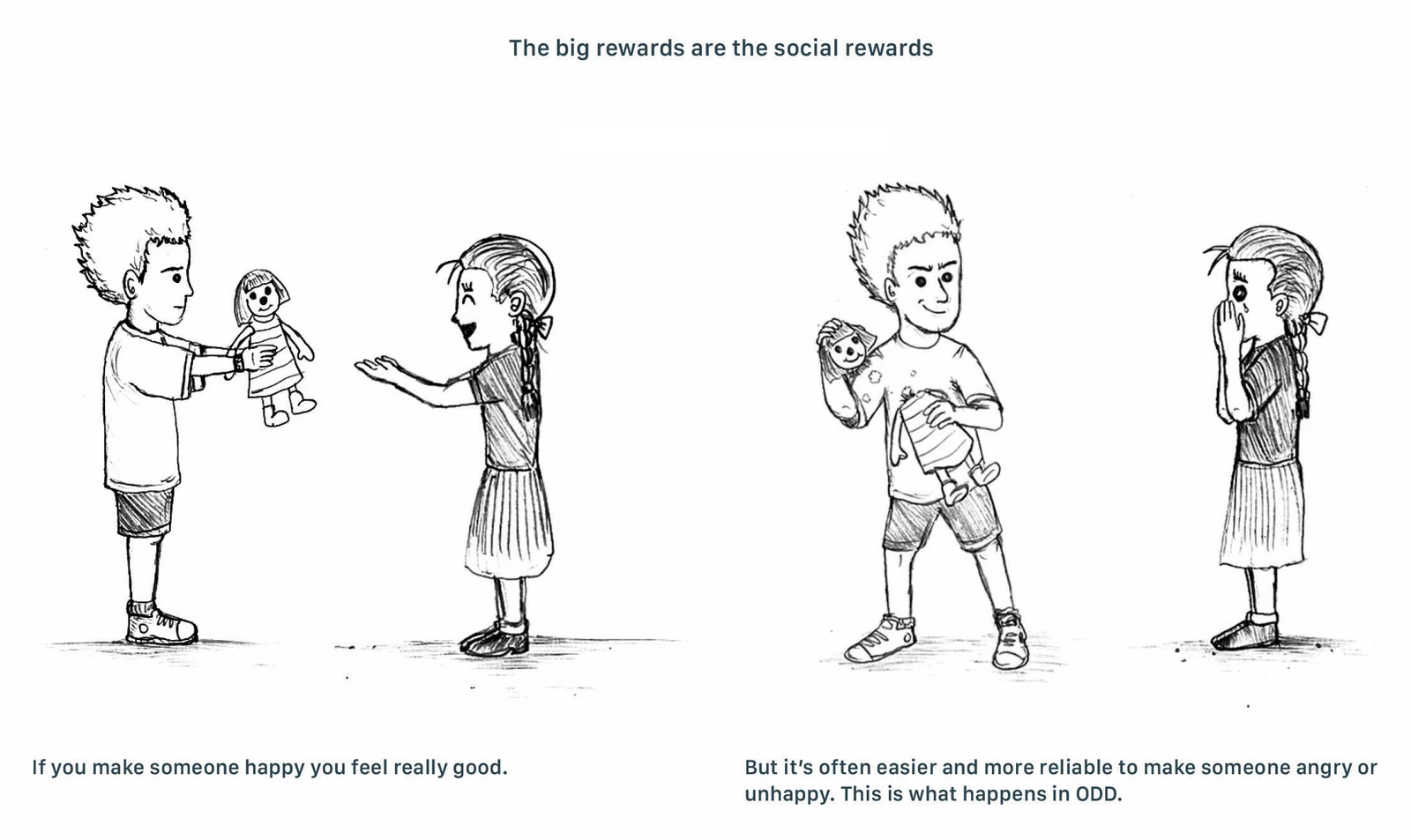
A person who does not experience enough reward may feel a bit better after being deliberately difficult or upsetting someone. This behaviour, which compensates for deficits in the subjective experience of reward, may be addressing a problem with their brain chemistry. The behaviour therefore works for the person with ODD but clearly does not work for their family and work-mates. The positive impact of bullying on a person’s mood is shown in Figure 3.
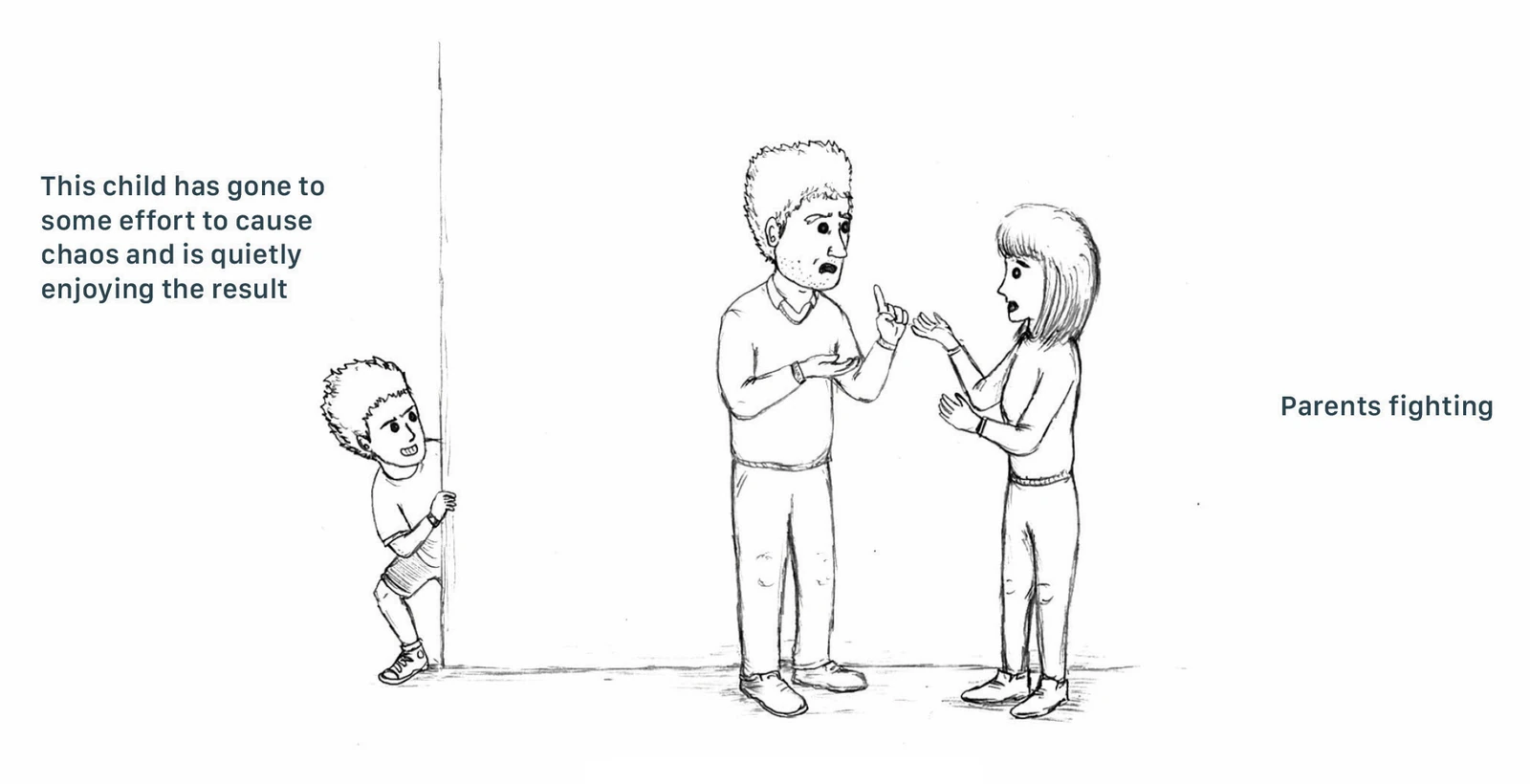
Winning is a highly rewarding experience. People with ODD may be intensely competitive and may not be able to tolerate losing a game or an argument. Teenagers or adults may actively look for opportunities for starting an argument that they think they can win. The following day they may argue for an opposing view if they think that this will give them the upper hand. Alternatively, they may be skilled at annoying or upsetting other family members, or playing one person off against the other, and experiencing quiet satisfaction at the resulting chaos. With increasing sophistication, the underlying spite may be heavily disguised and the hostility appear ‘accidental’.
It may be useful to consider ODD as a condition with rules that people with ODD tend to follow. This may help to predict a person’s likely response.
Rules of oppositional defiant disorder (ODD)
Overriding principle – the need to win
- Never admit to being wrong
- Always disagree
- The answer to any request is – “No!”
- Look for every opportunity to get the better of someone
- Winning is more important than reason or fairness
- Try to appear innocent by blaming someone else
One of the biggest problems with ODD is that the need to win an argument and the tendency to deny any fault or weakness may make a person adamantly oppose the need for treatment. Even if aggression lands the person in serious trouble, they may still argue and blame the circumstances or other people and deny their own responsibility. Such people can be very difficult to help.
Enhancing reward with emotional self-regulation
People with ADHD and reward deficiency may have their baseline mood set at a lower level than normal, making them feel somewhat irritable for much of the time. Therefore it would make sense to develop strategies for improving the mood. Unlike behaviour management which relies on external rewards, emotional self-regulation aiming to promote positive emotions has a theoretical advantage that its techniques may directly address the underlying reward deficit. For emotional self-regulation to work, a person would first have to be aware of how they are feeling emotionally. This involves stopping, thinking and developing their self-awareness of their mood.
Positive rumination
Rumination involves repetitive thoughts that can influence an individual’s emotional state. Rumination is conventionally considered to be negative as the repetitive thoughts are distressing and can lead to a range of mental health problems including depression and anxiety. Positive rumination is a strategy that may help happy people to sustain their positive mood and amicable outlook. As it is a cognitive process that would involve some mental effort, it may come less easily to individuals with ADHD.
If a person completes a task with the sole aim of avoiding getting into trouble, this might be considered an acceptable outcome as the work is done. However, if the attitude towards the work is poor, it is likely that it will be completed to the lowest acceptable standard. An example of positive rumination would be for a person to spend a bit of time admiring the good points about a piece of work that they have done and then reflecting on the sense of satisfaction that this generates. If person finds that their achievement leads to a happier mood, they may be ready to put more effort into next challenge to achieve.
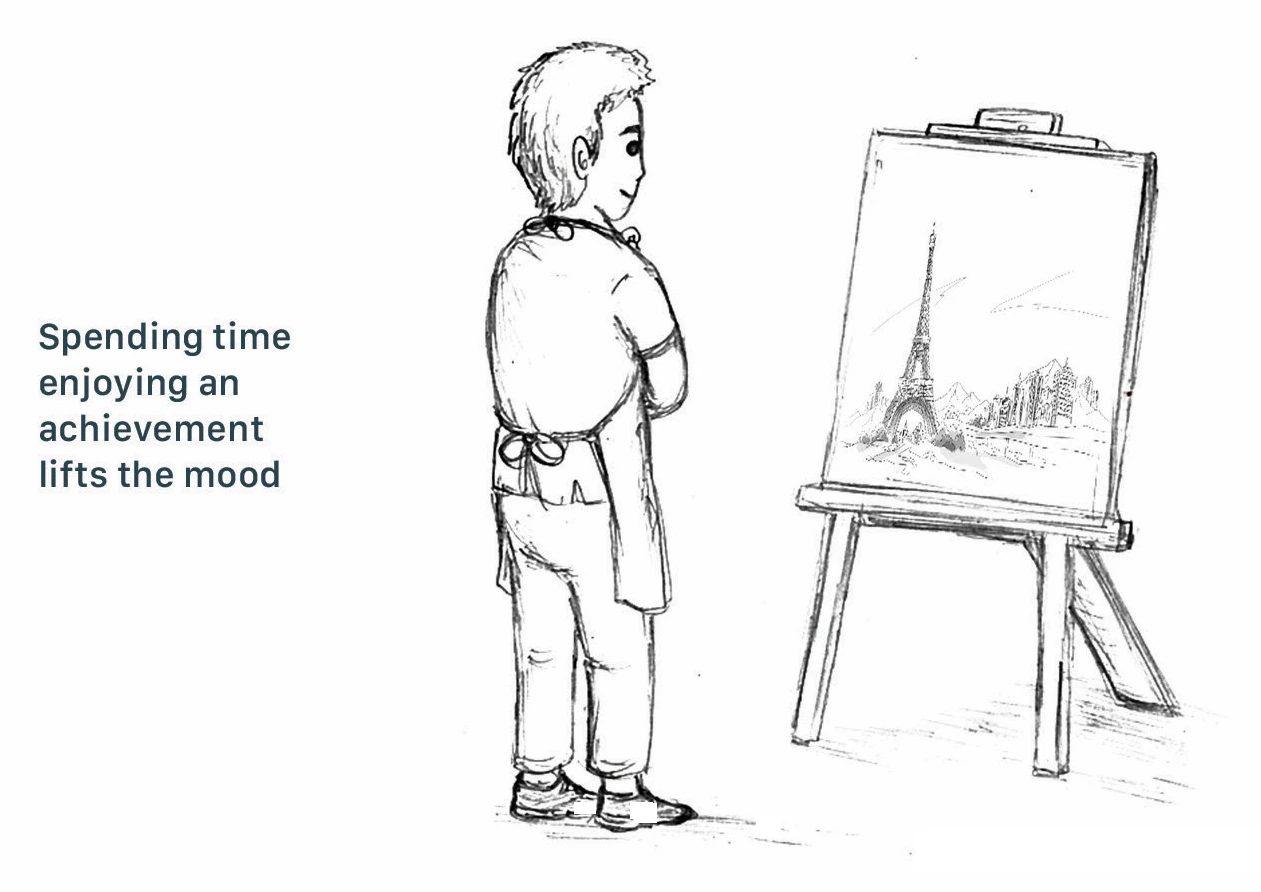
Times of positive reflection may also be built into the daily routine. For example, at bedtime a person may reflect on the positive and enjoyable experiences and the achievements of the day. In the longer term, being able provide positive reinforcement for achievement may lead to more efficient functioning and better self-esteem.
Positive re-appraisal
Positive re-appraisal involves redefining an adverse event in terms of the possible positive aspects and actively looking to benefit from experience. For example, when a person is in trouble, if his or her mood and self-esteem can be preserved, the person may be less tempted to resort to bullying in order to feel better. Therefore he or she might rationalise the experience and think about what they have learned and how to do better in the future.
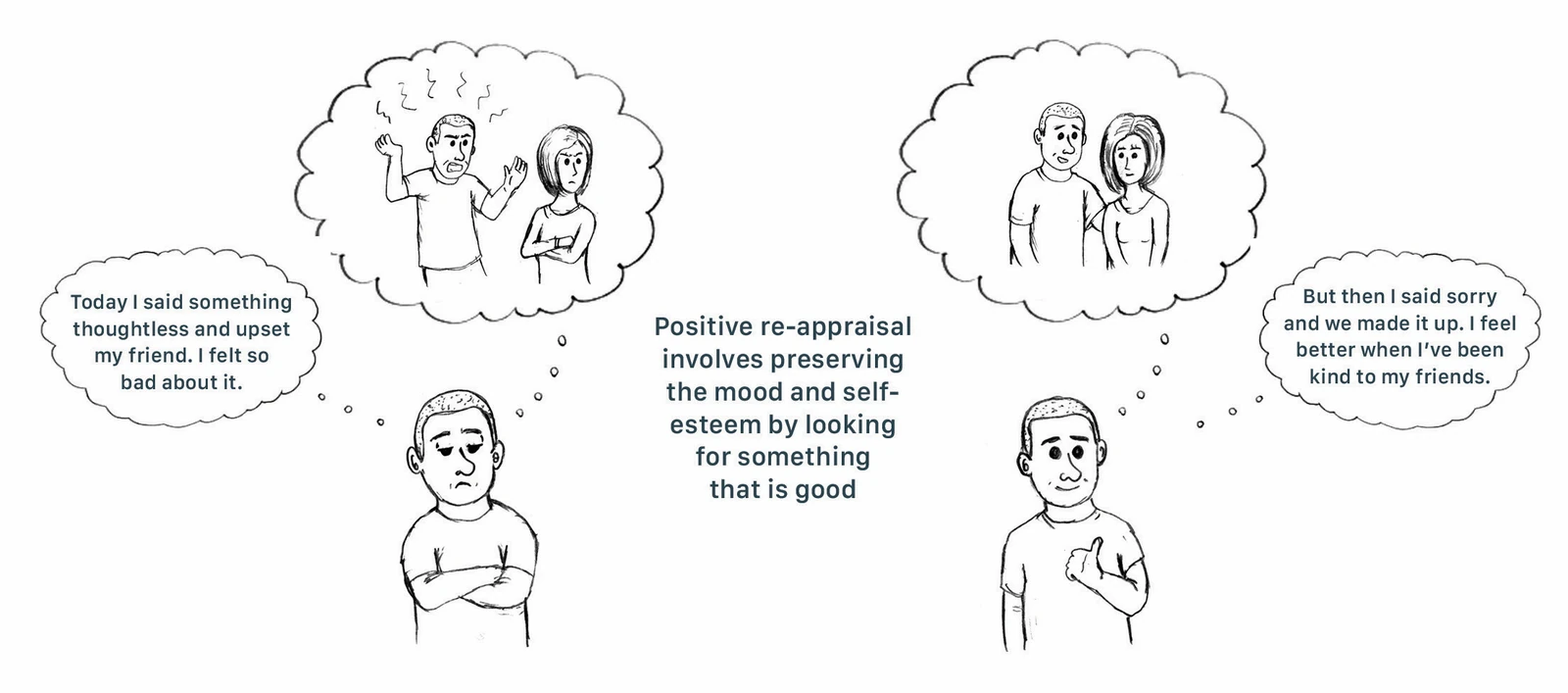
Anger is often a significant problem for people with ADHD and ODD. Anger may consist of a low or irritable baseline mood, or at the other extreme it may involve acute episodes of rage. If a person’s mood is lower than it should be, their anger is nearer the surface and more easily triggered. In some people this can be recognised when they show their irritability with a high rate of swearing.
Anger management
Anger makes it far more difficult for a person to behave rationally. It is as if the anger takes over the decision-making process so that the brain cannot function properly. A person who is angry may feel like releasing the energy, and this may help them to get over it. Anger may be released in a way that causes minimal harm, such as swearing, or punching or kicking an object without damaging it. If the anger is more severe, the person will want to cause hurt, damage or injury. During a rage attack a person becomes so angry that they may lose all control, perhaps afterwards having cause to deeply regret their actions, particularly if they have injured someone. They may also have little recollection after the event.
A person who is susceptible to severe bouts of anger needs to learn to recognise the warning signs, so that they can move away from the situation and avoid causing harm. Signs of anger may include physical tensing, clenching the fists or wanting to shout and swear. Being aware of feeling hot and having a pounding heart may also help with anger recognition. A person can then move away to a safe place where they can let their anger out harmlessly. This might be by screaming and hitting a punching bag or going for a run. Calming strategies can also be useful and may include concentrating on controlled breathing, or taking deep breaths with self-instructions such as ‘calm down’ or ‘relax’ while breathing out. Imagining reducing the body temperature and heartbeat may also help.
When a person is impulsive due to ADHD and also has a low baseline mood and is easily triggered to anger due to ODD, the potential for conflict may be substantial. Such a person may misinterpret other people’s actions as hostile and therefore easily become angry if another person’s motive is unclear. An example might be impulsively retaliating with violence to an accidental push or shove (see the illustration above). If questioned afterwards he or she may try to justify the aggression by blaming the other person. As people mature they often realise that they make better choices if they delay making any immediate response while they are feeling angry. Therapy may emphasise thinking of non-personal reasons to explain another’s behaviour instead of taking offense (for example: ‘the boss might just have been having a bad day’).
Emotional self-regulation with the dual aims of promoting a good mood and also recognising the signs of anger so that loss of control can be prevented, appears logical and sensible. If strategies can be used effectively by people with ADHD, they could lead to improvements in mood, functioning and self-esteem which would not be linked to specific tasks and situations.
ADHD as a continuum
The features of ADHD and ODD are often said to be continuously distributed throughout the population. This means that while some people clearly do have ADHD and others clearly do not, there are all different shades of grey between the extremes of black and white.
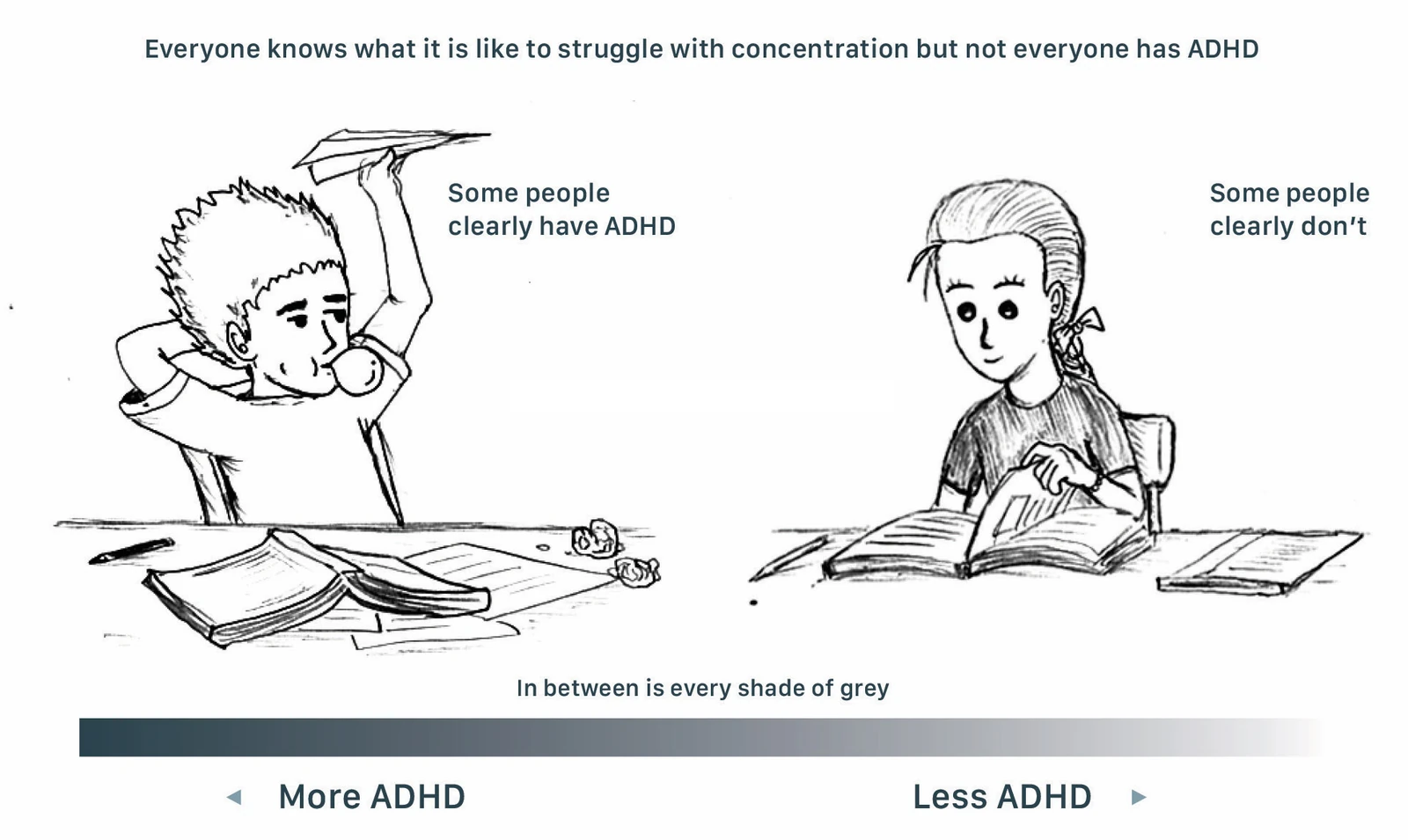
This creates a challenge for diagnosing ADHD, because there is no precise cut-off between those who do and those who do not have ADHD. The same goes for ODD. But the positive side of this is that everyone can understand what it feels like to have difficulty concentrating or to find that a task is just too much effort. It also means that having an understanding of ADHD and ODD also helps for understanding people in general. Just as people with ODD may be striving to make their lives feel more rewarding, everyone wants to achieve adequate reward with a manageable level of effort.
Most people would expect to get most of their reward from their routine everyday tasks, such as their work, talking with their friends and family (positive social interactions), entertainment and bodily functions such as eating. Within the broad categories of chores, schoolwork and social interactions, different activities will vary in their level of interest and difficulty, with some chores and schoolwork being experienced as more rewarding and less arduous than others.
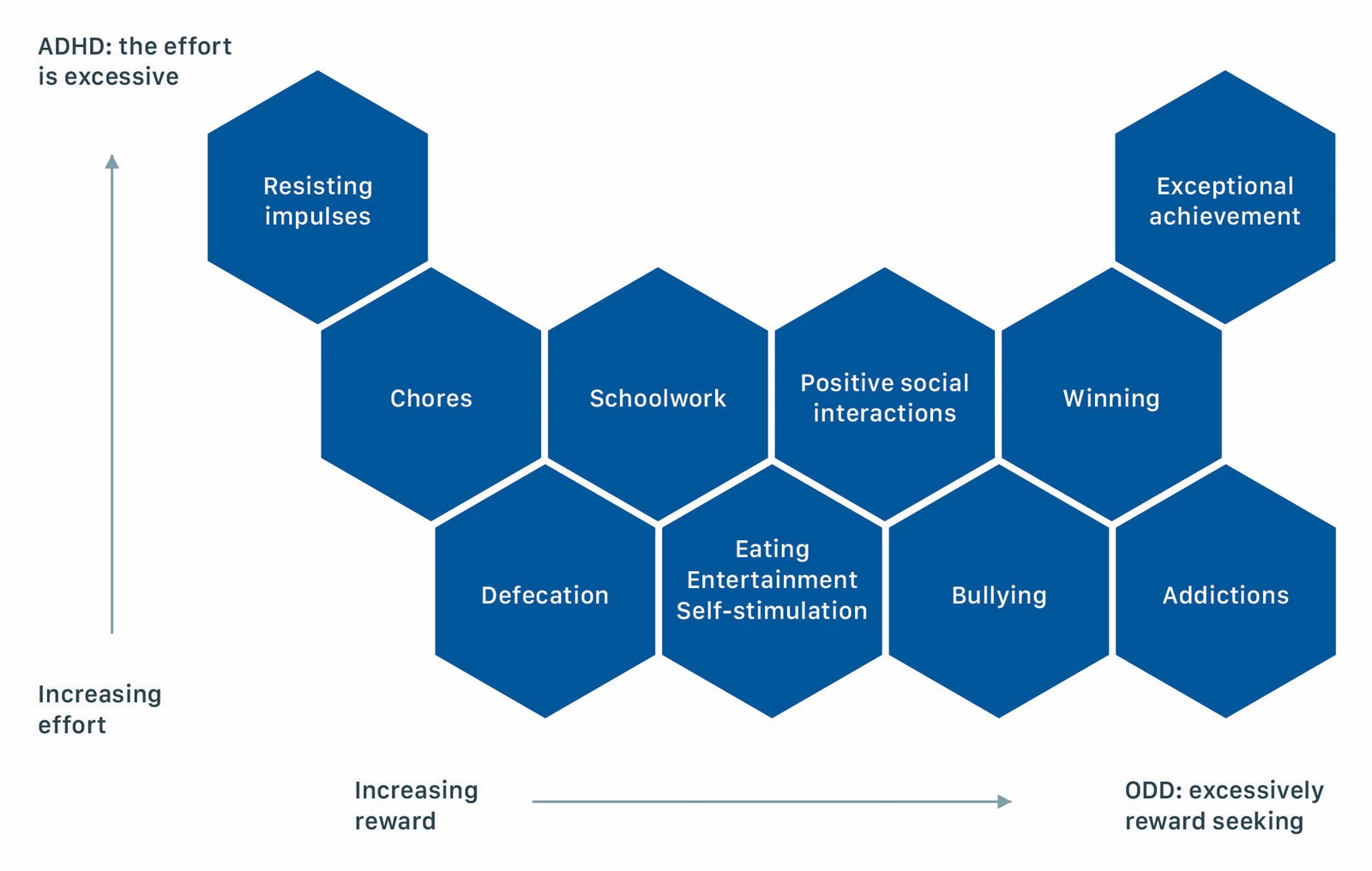
Figure 4 shows a range of activities that vary in the amount of effort they require and the level of reward experienced. People with ADHD find it difficult to put in the mental effort. People with ODD who experience little satisfaction from the everyday activities of life would tend to seek tasks that are high in reward. If someone has both ADHD and ODD, for an activity to be worthwhile the level of reward has to be particularly high for the level of effort. However, if the reward is great enough they may be able to make considerable effort.
If a person’s experience reward is inadequate, they will tend to feel low and dissatisfied, with their anger easily triggered by minor frustrations. They may also be striving for the higher rewards. Some people with reward deficit may be intensely competitive. Those who are intellectually able may strive for exceptional achievement. If they fail, this may lead to hostility towards those who succeed. Alternatively, they may feel better after they find someone to bully, as happens in ODD.
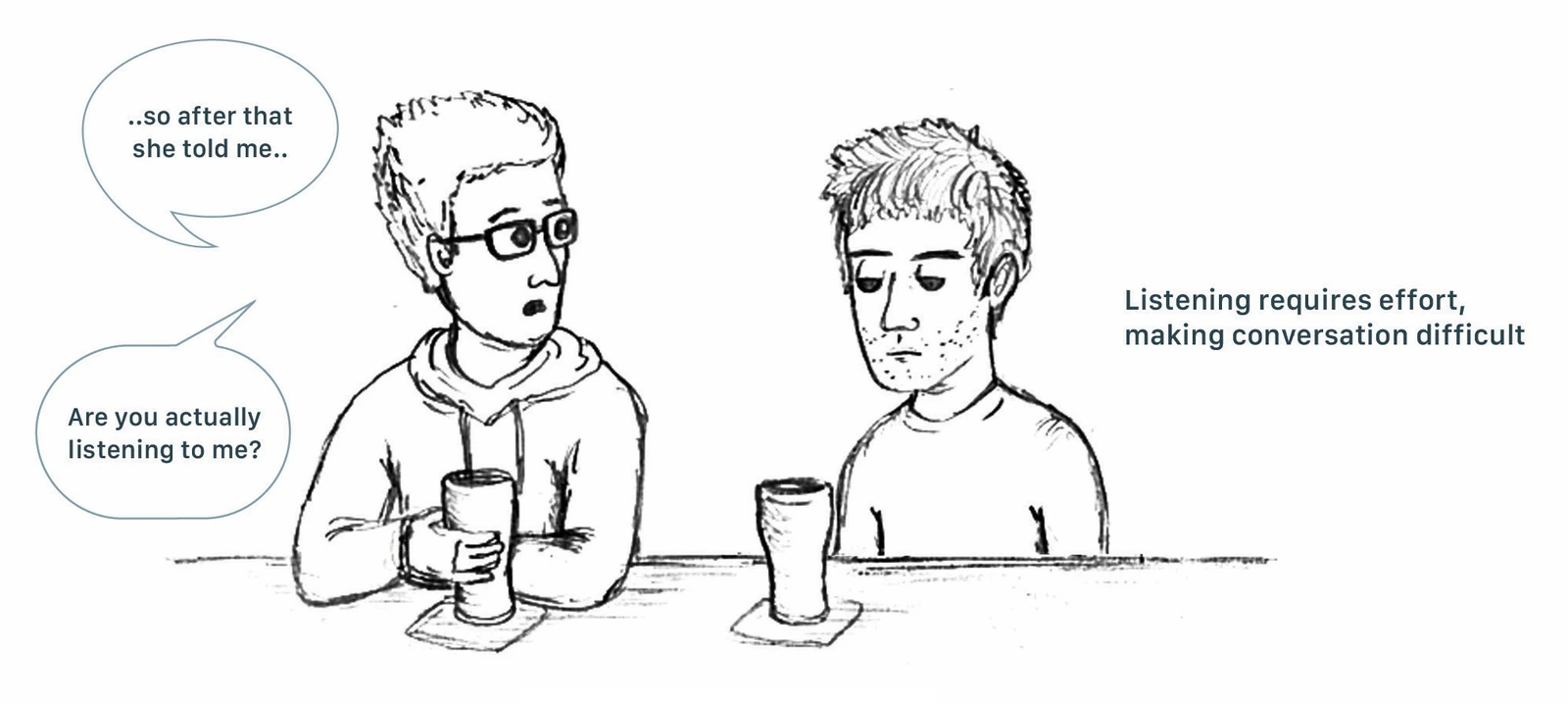
The level of effort required for social interaction is often underestimated. Adolescents and adults generally demand a high level of attention from their friends and even though conversation is rewarding, a person with ADHD may find the intensity of the mental effort unsustainable.
People with ADHD and ODD are particularly susceptible to addictions to substances such as nicotine or illicit drugs. Conversely, resisting impulses and resisting emotional decision making requires substantial effort and is not particularly rewarding.
- Most people get most of their reward from positive social interactions, task completion, entertainment and positive bodily functions.
- For people with reward deficiency/ODD, greater rewards are needed to rectify their low mood. The strategies people use for compensating will depend on other personal attributes – for example exceptional achievement is only possible for those with high ability.
- Gaining an emotional response from other people is highly rewarding, but negative responses (from bullying) may be easier to organise than positive responses.
- A person’s mood is a measure of the success of their strategies
Diagnosing ADHD – the importance of assessing functional impairment
In most people with ADHD the diagnosis can be made by detailed questioning:
- Symptoms of ADHD (inattention, hyperactivity and impulsivity);
- Problems and difficulties that a person has experienced because of these symptoms (impairment in functioning – see box below);
- Strategies that a person uses that help them to get through their daily routine.
The key to recognising ADHD is not simply a matter of seeing the symptoms but, more importantly, it relates to the resulting problems in functioning.
ADHD can affect the following areas of functioning
- Achievement in relation to ability
- Social and working relationships
- Ability to function at home without generating unreasonable levels of stress or disruption
- Ability to function at work without generating unreasonable levels of stress or disruption
- Level of self-esteem
Percentage efficiency
One way of assessing the severity of ADHD is to consider the percentage of time that a person’s mind is on task while they are working. For example, a teenager whose attention span is only 10-15 minutes will be concentrating for only 25% of a lesson that lasts for an hour. Unless the teenager is exceptionally able, he or she is likely to drop further and further behind as the demands of school increase. Similarly a person who is only able to concentrate for 25% of the working day will never be as productive as they should be.
Baseline mood setting
When evaluating a person for ODD it is useful to ask about their baseline mood to find out whether it is lower than normal. Some people with ODD rarely appear to be happy and spend a higher percentage of the day being irritable and negative in their attitude. The person with ODD may not be aware of this because they consider their low mood to be normal. The moodiness may often be more readily apparent to the person’s partner, other family member or workmate. Assessing the percentage of the time that a person’s mood is happy or pleasant can be informative.
ADHD and mental illness
Mental illnesses, such as depression and anxiety, are common, particularly in people with ADHD. If a person is achieving less due to the unsustainable level of effort they have to put in, they are likely to experience less satisfaction. They will also experience more mental fatigue associated with thinking, or with meeting the intense demands associated with socialising and conversation with friends. They may be less ready to put further effort into the next task, with a tendency to give up easily. Inefficient mental processes therefore contribute to underachievement in ADHD and consequent low self-esteem. This may be associated with depression, anxiety or substance abuse. It is very important for the psychiatrist or therapist to screen carefully for the possibility of underlying ADHD. If there is untreated ADHD, treatment of the associated mental condition is unlikely to be very successful.
Depression
Low self-esteem associated with the difficulty of achieving goals that ought to be manageable, may progress to depression. The inability of friends, family or workmates to comprehend that the difficulty a person with ADHD has with sustained concentration is genuine may make matters worse. Being blamed for laziness or inefficiency may contribute to feelings of low self-worth and depression.
Anxiety
ADHD increases susceptibility to anxiety. If a person’s mind is not fully focussed or they have frequent lapses in concentration, important information may either be missed or forgotten. This may lead to frequently being in trouble for not knowing what to do or not doing things correctly. The ever-present fear of failure may be associated with anxiety. Impulsiveness may also lead to anxiety because a person may keep saying or doing the wrong thing without being able to stop, think and consider the outcome.
Anxiety may sometimes mask ADHD when fear of failure increases the motivation to achieve. However, this increased effort has a cost and afterwards the person may be mentally exhausted and short-tempered. Worrying may also be very tiring, adding to the mental fatigue associated with ADHD. Therefore although a little bit of anxiety may help focus the mind in ADHD, too much anxiety will not.
Obsessive compulsive disorder (OCD) is a type of anxiety in which people do repetitive activities as a way of relieving their worrying thoughts. For example a person may have an irrational fear of germs and keep washing their hands, or may keep checking that the house is locked if they are afraid of burglars. OCD may be worse in ADHD because if a person is not concentrating on the tasks of the day, they will have more time to spend on their obsessive-compulsive disorder. The compulsions also act as a further distraction that takes their mind off their tasks. Treatment of ADHD may therefore improve the response to therapy in OCD.
Substance use disorder
People with ADHD have a greatly increased risk of addiction. This is partly due to impulsiveness and difficulty with making good decisions. If a person with ADHD is having difficulty achieving, they may drop out of school or work and get into bad company and start taking drugs. Alternatively a person may use drugs to make themselves feel better, directly addressing their reward deficit. Addiction to cigarettes is particularly common in ADHD because of the calming effect of the nicotine. Treatment of substance use may be more successful if the ADHD is also treated.
Gaming and internet addiction
Games are designed to be compelling, entertaining and rewarding. The rewards may be visual, such as seeing a target explode, or may result in accumulating points. It can be very difficult for a person to stop playing and get on with their life, because they are always wanting the next win. Some online games involve other players, which adds negative social consequences for leaving a game unfinished.
People with ADHD often experience more boredom than others because they find the activities that they should be doing require too much effort to be worthwhile. Electronic entertainment that constantly stimulates and rewards and requires no independent, creative thought may be particularly addictive to people with ADHD.
Obesity
Obesity is a complex disorder that usually has a mental component. Eating appetising food is a rewarding activity that does not require mental effort. Eating may therefore be used to address reward deficiency, briefly making the person feel a bit better. This is often called ‘comfort eating’. A person with ADHD is likely to have a lot more difficulty with controlling impulsive eating and with putting effort into increasing their level of exercise level in order to lose weight. As a result, ADHD is often associated with obesity.
Medications used for treating ADHD
A person with ADHD may learn strategies that help them compensate and get through their daily life. However, medication can address the underlying problems with the brain’s capacity to function efficiently and can also reset the baseline mood.
The aim of treatment: achieving and being able to function normally
- For a person to learn and remember, they have to be able to concentrate
- Control of behaviour may not be readily achievable without stabilising the mood and emotions
Mental efficiency and ability to concentrate
If attention is inconsistent a person with ADHD may have difficulty learning, remembering and organising their tasks, and thinking sufficiently well to make rational choices. They would also experience mental fatigue with tasks that require sustained concentration. The tendency to act quickly and impulsively without the opportunity for adequate decision-making can greatly reduce the efficacy of behavioural management strategies.
Emotional and mood stability
A person whose anger is easily triggered may become better at understanding and managing their anger, but the effort required for this may generate stress. In adults, even the occasional episode of anger getting out of control can have a devasting effect at home or in the workplace. Furthermore, the low mood that is associated with reward deficit will tend to lead to a negative, unco-operative attitude. This may make the person less well-liked.
- The aim of treatment is efficient functioning and achieving goals in life
- It is most important to find the medication and dose that works best
- Medication is continued for as long as necessary and may be lifelong
The aim of treatment in ADHD is to enable a person to function efficiently and achieve their goals that are realistic for their level of ability. People who have significant difficulties in coping with life due to ADHD and ODD are sometimes recognisable as those who do not respond to good, consistent management strategies that they may be working on with their therapist or coach. Alternatively they may be receiving treatment for another condition such as depression or anxiety and not responding well due to their untreated ADHD. Behaviour management strategies can be very helpful, but only medication can target the neurochemistry that underlies ADHD. Therefore even with the best behaviour management strategies, the mental inefficiencies that are fundamental to ADHD will remain.
Stimulants to improve the symptoms of ADHD and ODD
The medications used most frequently in ADHD are the stimulants. They enhance the levels of neurotransmitters, which are the chemicals that enable communication between the different cells in the brain. This generally results in improvements in the efficiency of the ‘thinking’ brain. Stimulants also improve the mood and behaviour, which may be an effect of enhancing the activity of the dopamine reward pathway.
The beneficial effect of stimulants in ADHD was first recognised in the 1930s. Since then numerous trials comparing them with placebo (inactive tablets) have confirmed that the stimulants are effective for treating ADHD. In fact the stimulants are almost certainly the most studied and the most effective drugs used in psychiatry. They work in pre-schoolers, school aged children, adolescents and adults, including the elderly, improving the ability for sustained attention. They also suppress the appetite. Although usually combined with behavioural interventions, the stimulants often have a more immediate and more obvious effect than behaviour therapy.
Practical considerations with using the stimulants
Side effects
The most significant side effect of using stimulant medication for treating ADHD is usually the effect on appetite and weight. It is as if the stimulant resets the appetite at a lower level. This is a bit like turning down the thermostat when heating a room. The heater goes off and the room cools down until it reaches the temperature where the thermostat is triggered and the heater starts up again. A person therefore loses weight initially, but after some weeks the appetite picks up and the weight stabilises. Appetite suppression appears to correlate closely with the therapeutic effect. This means that a dose that does not cause any weight loss when used consistently is likely to be too low to be effective.
As the effect of the stimulant wears off later in the day, the appetite returns there may be rebound, with moodiness and irritability. It is as if the behaviour that is held in check by the medication is released as the medication wears off. Rebound may be helped by using a long acting formulation that wears off more gradually, or taking an additional, smaller dose, later in the day.
Stimulant medication also increases the heart rate and blood pressure and can cause difficulty sleeping, irritability and feelings of sadness. The sadness usually improves over the first 2-3 weeks although some people continue to feel lower in their mood while on stimulants. The long-term effects of the higher heart rate and blood pressure are unknown, but it is possible that these effects, if uncontrolled, may increase the risk of having a heart attack or stroke. However, if the blood pressure is being checked regularly, high blood pressure may be detected and treated early.
Stimulants have been associated with tics (habit spasms, such as twitches of the face or eyes, or repeated throat clearing). However, tics are more common in people with ADHD. Tics tend to come and go, getting worse for a few months and then improving. They may therefore coincide with starting stimulant medication. If necessary medication could be ceased, to find out whether this makes the tic improve.
Treating ADHD with medication is a process of constant reassessment, always looking at the advantages and disadvantages of treating versus not treating. If the medication is working well, some side effects may be tolerated, keeping in mind that no medication is perfect.
Using short or long acting (slow release) medications
The stimulant medications dexamphetamine and methylphenidate are short acting, with an effect that lasts around 3-4 hours. (Methylphenidate is the stimulant used in Ritalin and Concerta). In people who have significant hyperactivity or oppositional symptoms the effect is usually obvious in the first 30 minutes after taking medication. In people who only have inattention, the effect may be more subtle. Because the stimulants can cause difficulty with settling off to sleep at night, medication is often targeted to be effective earlier in the day, wearing off into the evening. This also allows the appetite to recover so that the person is able to make up for the reduced appetite through the day.
The beneficial effect of stimulant medication may be prolonged by using capsules that release the medication slowly over several hours. Slow release capsules also wear off more slowly, which may reduce the rebound effect. Formulations of methylphenidate include short acting Ritalin tablets (duration 3-4 hours) and the longer acting Ritalin LA (6-8 hours) and Concerta (8-10 hours). Dexamphetamine is also available as lisdexamfetamine (Vyvanse), in which the dexamphetamine has been inactivated by combining it with a protein molecule. It is reactivated in the body but this process means that it is retained for longer, usually lasting 8-12 hours; it is therefore only taken once daily.
Using a short acting medication can be inconvenient because it is regularly wearing off and the person has to keep remembering to take their next dose. However, there can also be advantages. Firstly there is always the opportunity for the person and their family to compare their functioning on and off medication. This means that medication can be targeted to the times when it is needed most. However, it is always important for a person with ADHD to take advice from family and workmates because the problems associated with ADHD and improvements on medication are often more obvious to other people.
Choosing the right stimulant and establishing the dose
The stimulants dexamphetamine and methylphenidate are similar in their beneficial effects and their side effects. Most people with ADHD will have a good response to either medication but some definitely do better on one than the other. One of the most important aspect of using these medications is to find the dose that works best for the individual. This is usually done by starting at a low dose and gradually increasing the dose while observing the changes in functioning. As the dose is increased, there is usually progressively more improvement in functioning until a level is reached where further increases do not lead to any further improvement. This is the optimal dose. If the optimal dose is exceeded the behaviour may worsen: some people become more angry; others become withdrawn and depressed. If this happens, the dose should be reduced.
Abuse potential
One ongoing concern about using the stimulants is the risk of abuse and diversion. Although chemically similar to cocaine and methamphetamine (‘speed’), the stimulants used in ADHD are far less addictive. This is because they take longer to enter the brain and bind with the dopamine receptors, which makes them less euphoric. This means that people who abuse stimulants are more likely to use them so that they can work or study for longer. It is reassuring that even though stimulants have been used in ADHD for more than half a century, there is still very little evidence that people treated for ADHD are at risk of becoming addicted to their stimulant.
Prescribing restrictions
The use of ADHD medications in Australia is regulated with prescribing restrictions and also with limited Medicare benefits for some formulations. The stimulants need the involvement of a psychiatrist or paediatrician. Lisdexamfetamine (Vyvanse) and the sustained-release formulations (Ritalin LA and Concerta) are only available on Medicare for children and for adults who have been diagnosed in childhood. The other non-stimulant medications can be prescribed by general practitioners, although this is not usually supported by Medicare.
Other medications used in ADHD
Atomoxetine
Atomoxetine (Strattera) has been developed for treating ADHD. It is not a stimulant and therefore lacks the abuse potential of the stimulants. It is also longer acting than the stimulants, giving a more consistent effect over the course of the day. Because of the longer time that it stays in the body, it is given as a low dose and may take several weeks to build up to give an adequate effect. Although studies have shown that the majority of people with ADHD respond to atomoxetine, the response is more variable than the stimulants. Atomoxetine has been shown to be beneficial for people with ADHD and anxiety.
Clonidine
Clonidine (Catapres) is a medication that can be helpful in ADHD. It can improve the symptoms of ADHD but is usually less effective than the stimulants and may need to be given more frequently to give a consistent effect. Sometimes it is used to prolong the effect of a stimulant or to balance out the side effects, as it causes sleepiness and may increase the appetite. It can also be helpful for anger and aggression. It was developed to treat high blood pressure and it drops the blood pressure and heart rate, which can be a problem in overdose.
Guanfacine
Guanfacine (Intuniv) is similar to clonidine but is longer lasting, requiring only once daily dosing. It is therefore more convenient and also more effective than clonidine.
Conclusions
- ADHD is a common condition which may have a life-long effect on functioning.
- It is important to consider ADHD in adults of all ages who appear not to be achieving as they should.
- The longer a person’s diagnosis and treatment is delayed, the more they are likely to regret the years they spent struggling with their ADHD.
- The goal of treatment is normal functioning.