Oppositional defiant disorder (ODD)
ODD is very frequently associated with ADHD. People with ODD typically overreact with anger in response to minor frustration. The lack of control over impulsive behaviour in ADHD becomes even worse when associated with anger. These children may incorrectly interpret another child’s actions as hostile. For example if accidently pushed, a child may automatically react by hitting. This may start a fight and children with ADHD sometimes show no fear, even fighting with children who are much older and stronger. Other children may find this loss of control amusing and may deliberately provoke or bully a child with ODD for a reaction. ODD is also associated with deliberately annoying people and sometimes with planned acts of spite. People with ODD are therefore at risk of bullying, or being bullied. ODD is also associated with a negative attitude and a tendency to blame other people and deny that they are at fault. They may also be argumentative and oppose authority. People with ODD often appear to have a negative mood and a bad attitude.
Why is do people with ADHD so often have ODD as well?
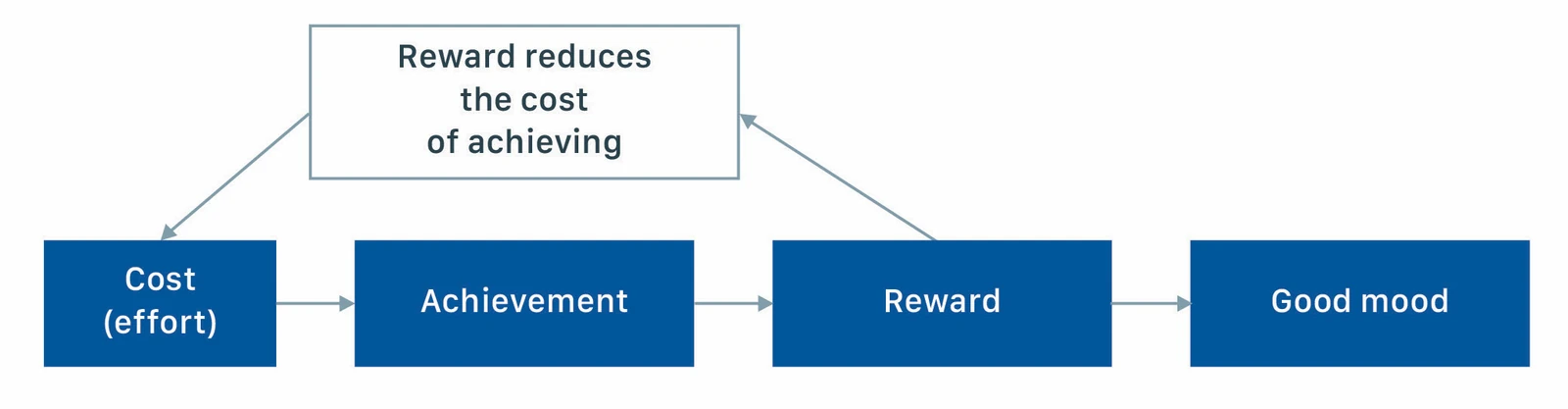
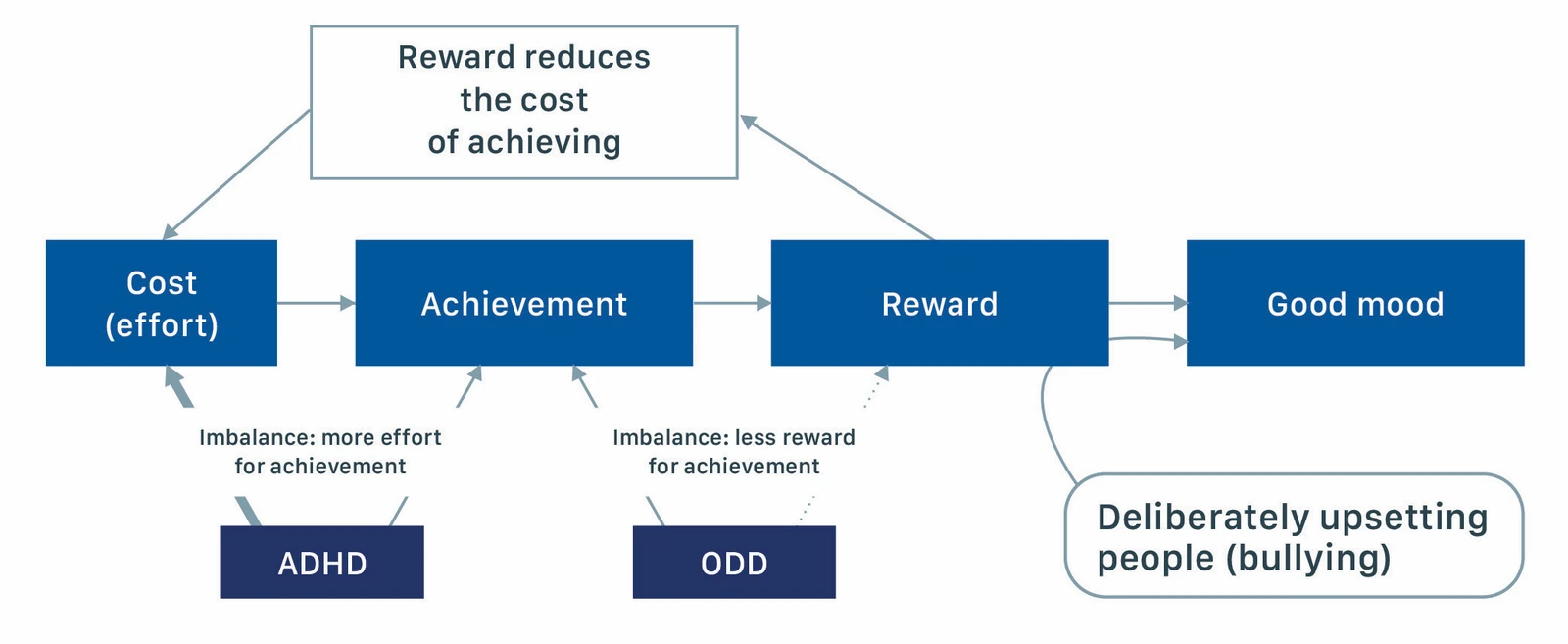
The most fundamental problem in ADHD is the difficulty with concentrating sufficiently to get tasks finished. This can be thought of as mental inefficiency – with everyday tasks requiring a disproportional effort. Getting through the daily routine involves a constant stream of tasks that all require some mental effort. Successfully finishing these tasks gives a series of achievements. Although most achievements are small, they are each associated with the satisfaction of task completion – the feeling of a job done well. These small feelings of success all help to sustain a stable and happy mood. Therefore, for example, you get up in the morning, you put some effort into getting dressed and ready to go. You look presentable in your clothes. You have achieved and you feel good about yourself and ready to put further effort into the next challenge. Achievement therefore involves some level of effort and is associated with a feeling of satisfaction (reward) which contributes to a good mood and a readiness to attempt the next task. Good mood is important for normal functioning. People who are fortunate enough to have a happy disposition tend to have better emotional, psychological and social well-being, which means better physical health and fewer days off work. The cycle of achievement, reward, good mood and further achievement is represented in Figure 1.
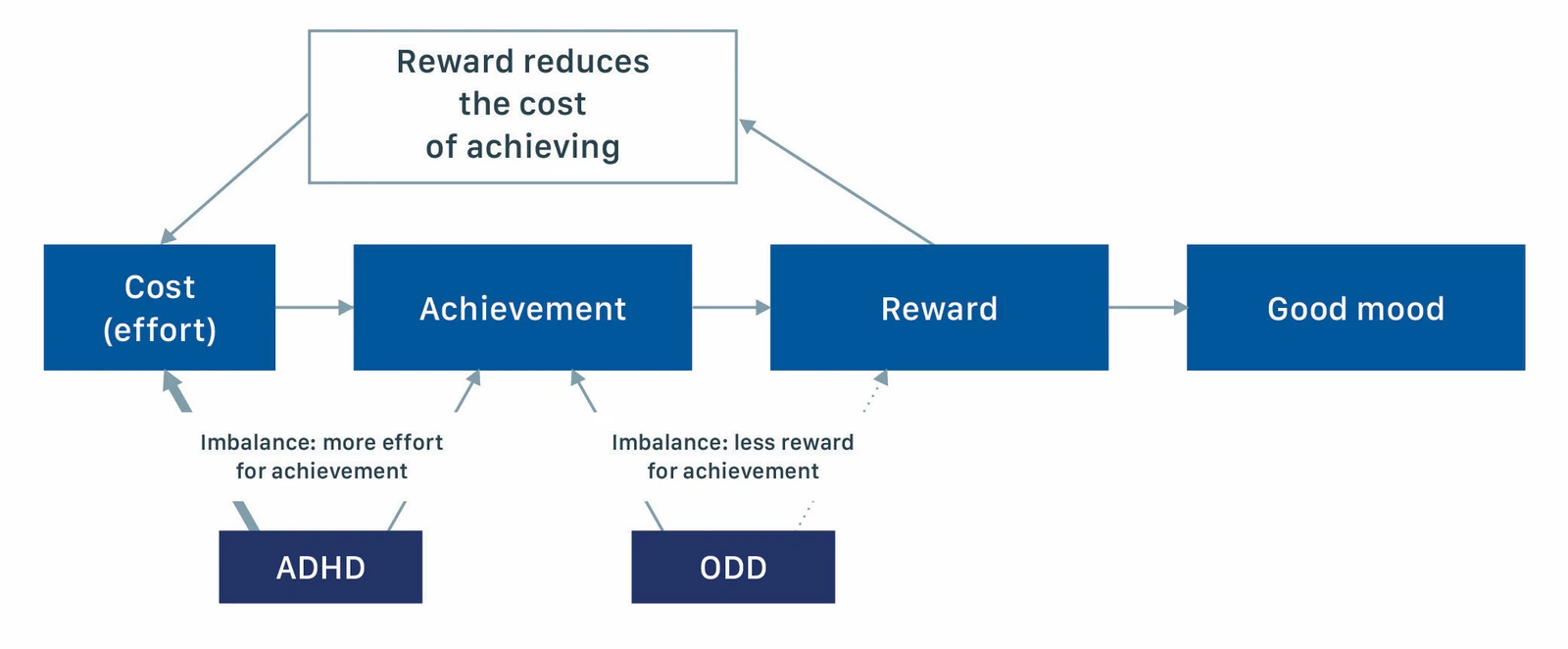
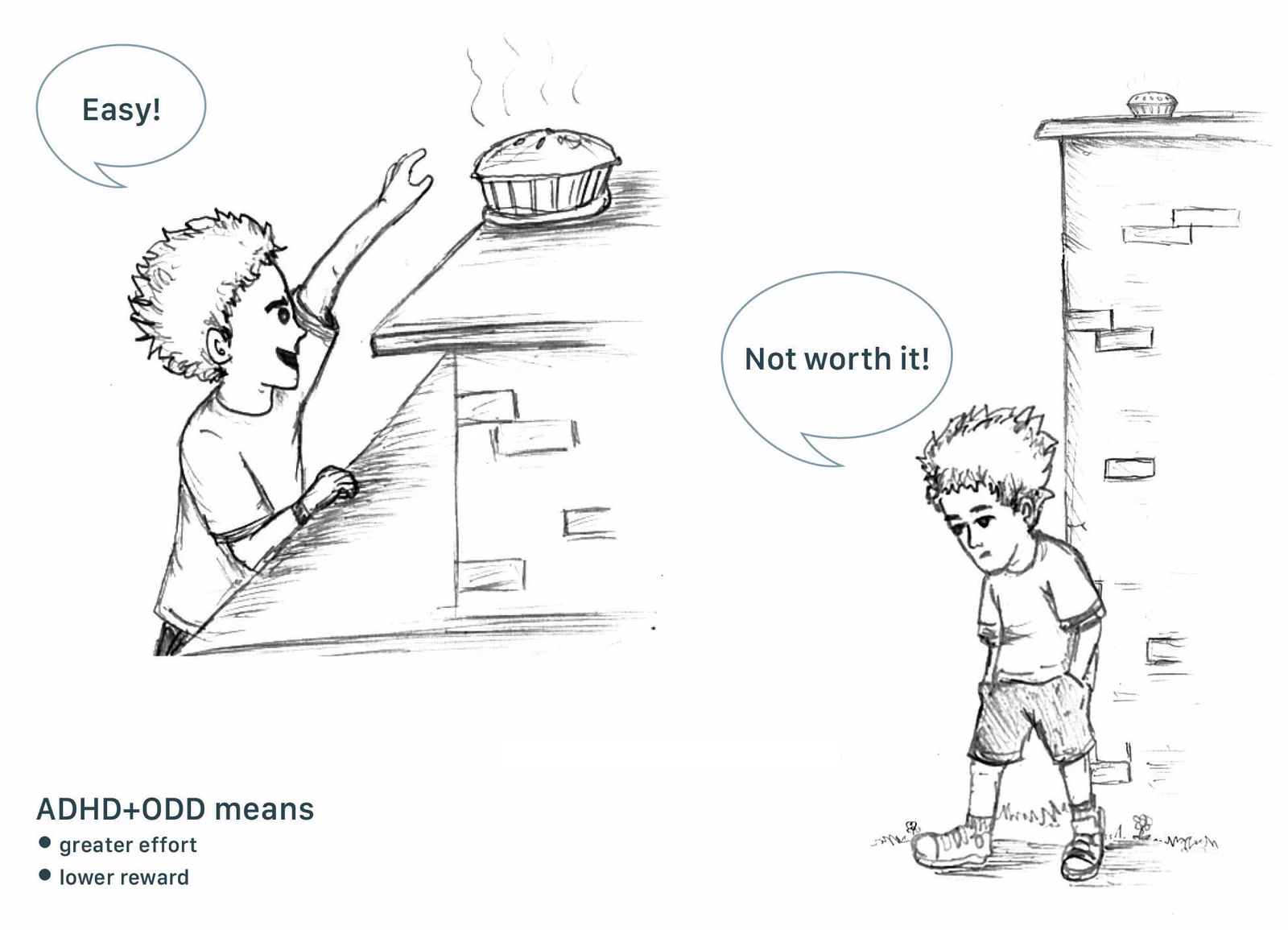
In ADHD the pathway shown in Figure 1 does not work as effectively as it should. There are two places where there can be problems. The first is if the cost or effort of concentrating well enough to achieve is too great, as occurs in ADHD. The second is if a person does not experience enough satisfaction to make the task worthwhile. This is what happens in ODD and explains the lower mood and general dissatisfaction with everyday tasks. If a person has ADHD tasks require more effort due to difficulties with keeping their concentration. If they have ODD as well, they will feel less inclined to make any effort at all, as they do not feel much satisfaction when they get the task finished. Therefore people with a combination of ADHD and ODD find achievement doubly difficult. The lower levels of successful task completion is associated with lower mood. This is shown in Figure 2.
Why would inadequate experience of reward lead to symptoms of ODD?
Getting pleasure from the little things in life is important as this helps to maintain a good mood and amicable outlook. However, if the subjective experience of reward is low, a person is likely to feel negative and dissatisfied. This low mood may lead to poor motivation – the feeling that a task is not worth the effort. People who have deficits in their experience of reward may feel miserable and moody – their anger is nearer the surface. They may also compensate by seeking activities that are more highly rewarding or that give reward for less effort. These rewarding activities make them feel happier. In ODD the reward-seeking behaviour is maladaptive.
When people communicate they have an effect on eachother. In a conversation, you would feel you had communicated successfully if the other person appeared interested. This might make you feel good about yourself. Making a person feel happy is even more rewarding. But it is not always easy to tell a good joke that makes people laugh, or give someone a pleasant surprise that makes them happy. It is often easier to affect someone’s emotions by irritating, hurting or upsetting them. This is what happens in ODD.
People with ODD are often argumentative, may deliberately annoy other people and may be spiteful or vindictive. Although these strategies might not appear to be rewarding or enjoyable, it is difficult to imagine a person being deliberately spiteful if this were not pleasurable in some way. A playground bully would not be a bully if he or she did not enjoy bullying.
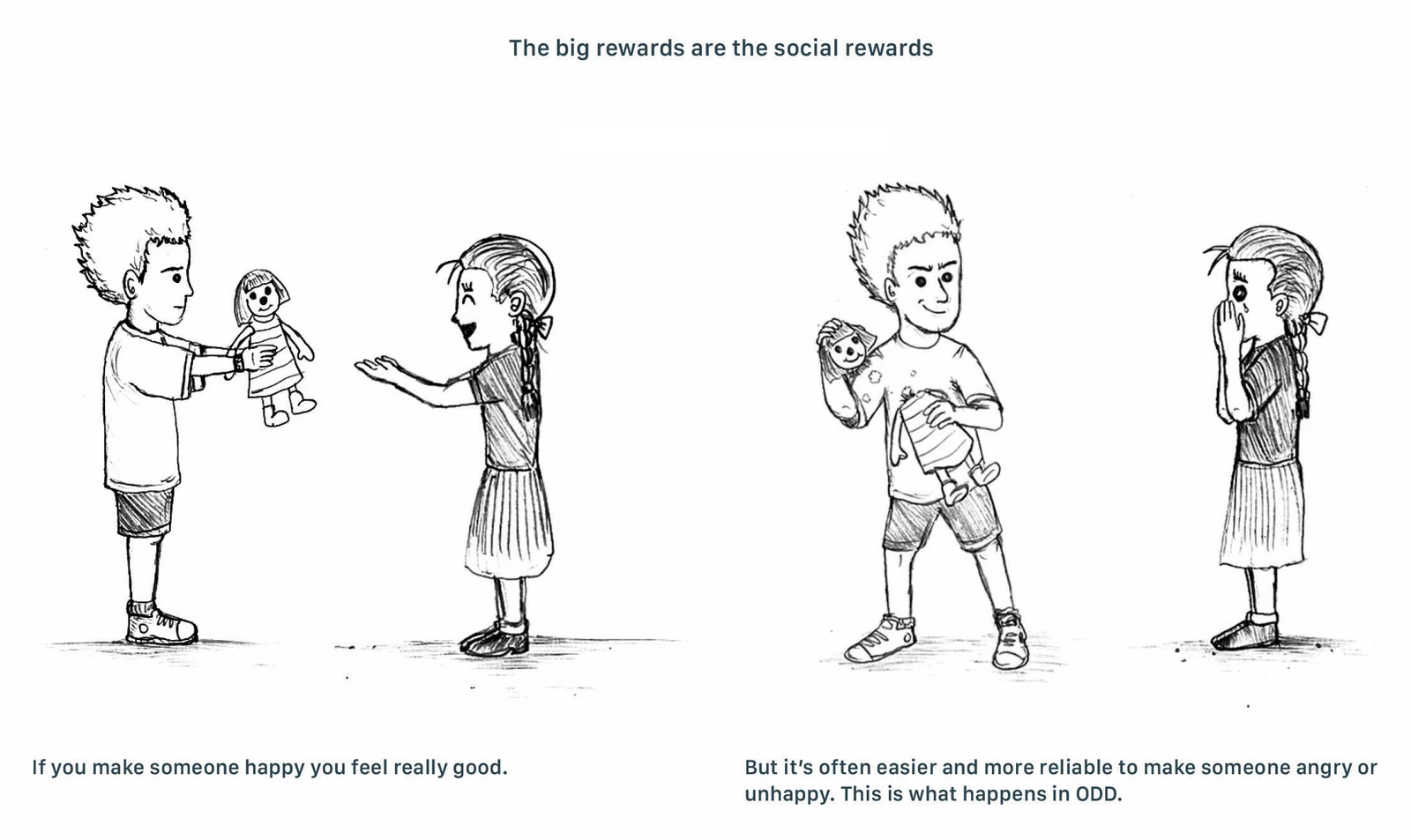
Eliciting a negative social response by being deliberately difficult may therefore be an effective strategy that compensates for deficits in the subjective experience of reward. The positive impact of bullying on mood is shown in Figure 3.
Parents sometimes say that their child with ADHD/ODD will argue that black is white. This implies that arguing may not be a rational debate but rather an end in itself. Sometimes parents may notice that their child starts out in an angry mood but as the argument goes on and the parent becomes increasingly frustrated, the child’s mood may improve. Therefore this strategy works for the child, but clearly not for the parent.
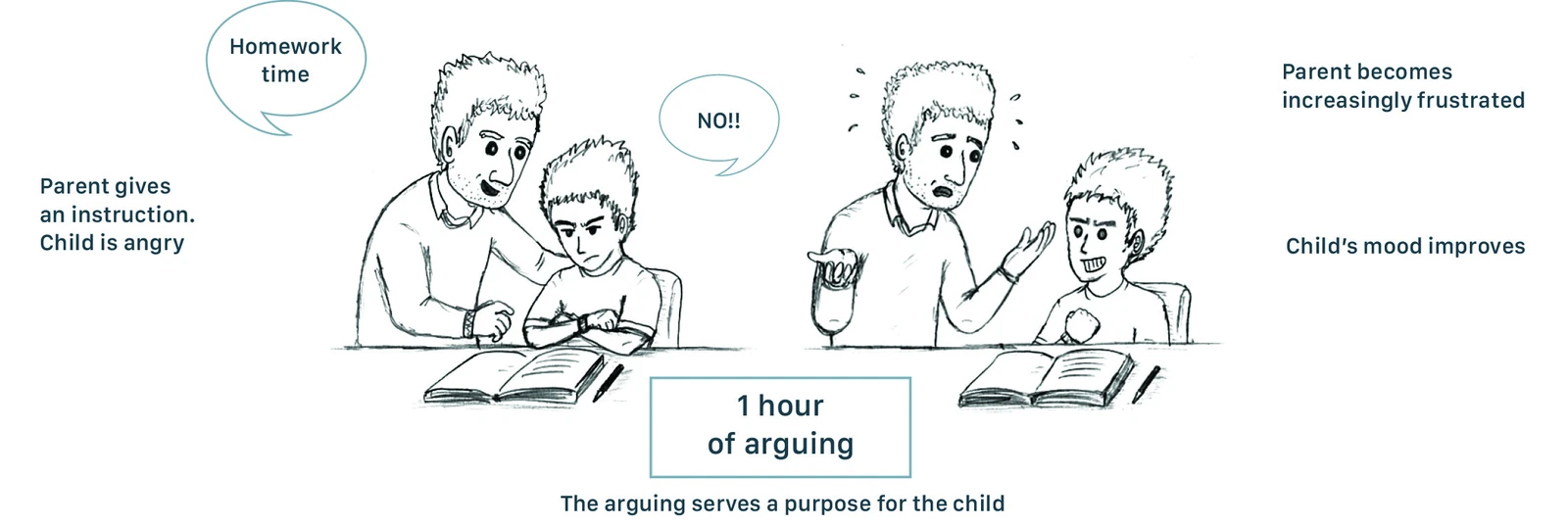
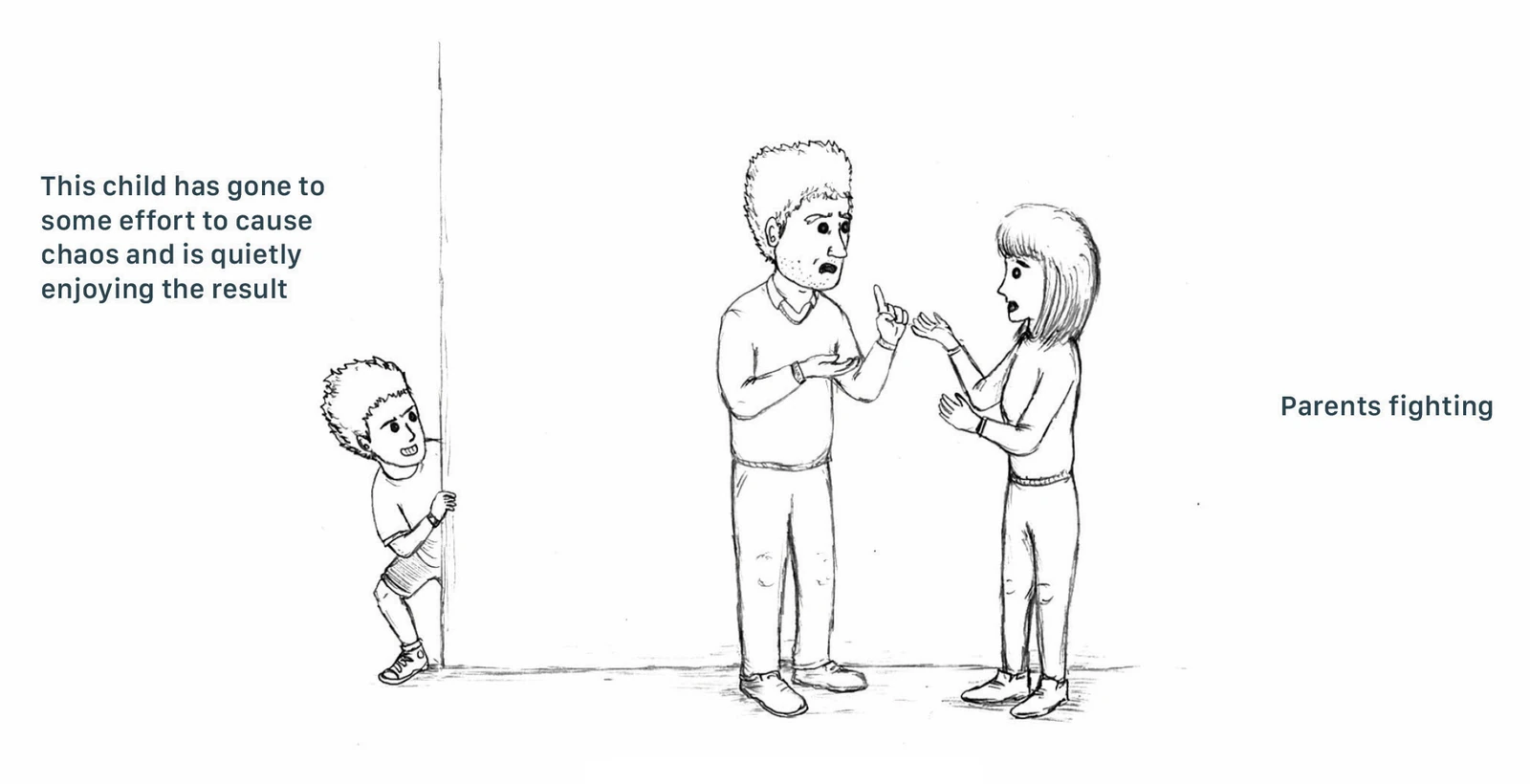
Winning is also a rewarding experience. People with ODD may be intensely competitive and may not be able to tolerate losing a game or an argument. Therefore the child who argues for an hour until the parent gives up, may gain more satisfaction from winning the argument than from getting out of doing the homework. Teenagers or adults may actively look for opportunities for starting an argument that they think they can win. Alternatively, children may become skilled at annoying or upsetting other family members, or playing one parent off against the other, and then quietly smiling at the resulting chaos. Children with less sophistication may simply resort to unprovoked physical violence when they feel irritable.
Lack of remorse in ODD
Some children with ODD may realise the social consequence and regret their behaviour after an act of spite. For example, a child who is both irritable and impulsive due to their ADHD, may quickly respond with aggression to a push or a shove, without considering that it might have been accidental. However, when spitefulness is planned or deliberate, then the hurt to the victim would be intended and would lead to satisfaction rather than remorse.