What is ADHD?
ADHD is a neurodevelopmental disorder. This means that a person’s brain functions slightly differently. The differences are sometimes subtle but persist for life. ADHD stands for attention-deficit/hyperactivity disorder. This is confusing because not all people with ADHD are hyperactive. Sometimes those without hyperactivity are said to have ADD – attention deficit disorder – but it is technically more correct to call this primary inattentive ADHD. Those with the full disorder, including hyperactivity as well as difficulty with attention, have ADHD combined-type.
ADHD is a common condition affecting at least 1 in 20 children. Boys are more often diagnosed than girls, although more girls with ADHD are now being recognised. ADHD is also common in adults. Some adults with ADHD have already been treated as children, but there are some adults whose ADHD was missed, or did not cause them serious problems until they became adults.
People with ADHD have difficulties in carrying out their daily lives due to problems caused by their ADHD. These are generally due to difficulties with concentrating adequately or difficulties with controlling impulsive behaviour. People with ADHD are often hyperactive – they feel restless and want to be active and moving. People whose ADHD includes hyperactivity are often easier to recognise than the quiet underachievers.
Does ADHD really exist?
There is evidence from brain scans that people with ADHD have delayed maturation of the prefrontal cortex, which is the part of the brain most involved in executive functioning – the ‘thinking’ part of the brain. Executive functions include working memory, reasoning, planning and resisting distractions. Studies of people with and without ADHD have also shown differences in the parts of the brain associated with experiencing emotion, motivation and reward. Although certain structures are slightly smaller in people with ADHD, this does not help with diagnosis.
For example, even though boys tend to be slightly taller than girls, you could never be confident that a child who was taller than average was a boy because girls can also be tall. In the same way, you would not expect that a person whose nucleus accumbens is slightly smaller than average would have ADHD. However, the fact that these brain differences exist, even though they are small, supports that this is a valid diagnosis. Boys and girls are different and ADHD is real.
How is ADHD diagnosed?
ADHD is a clinical diagnosis – it depends on a person meeting diagnostic criteria by showing the characteristic behaviour to a greater extent than would be expected for a person of their age or developmental level. This behaviour must also be causing problems in their daily functioning.
There are 3 main types of symptoms or behavioural characteristics that make up the diagnostic criteria for ADHD.
Inattention
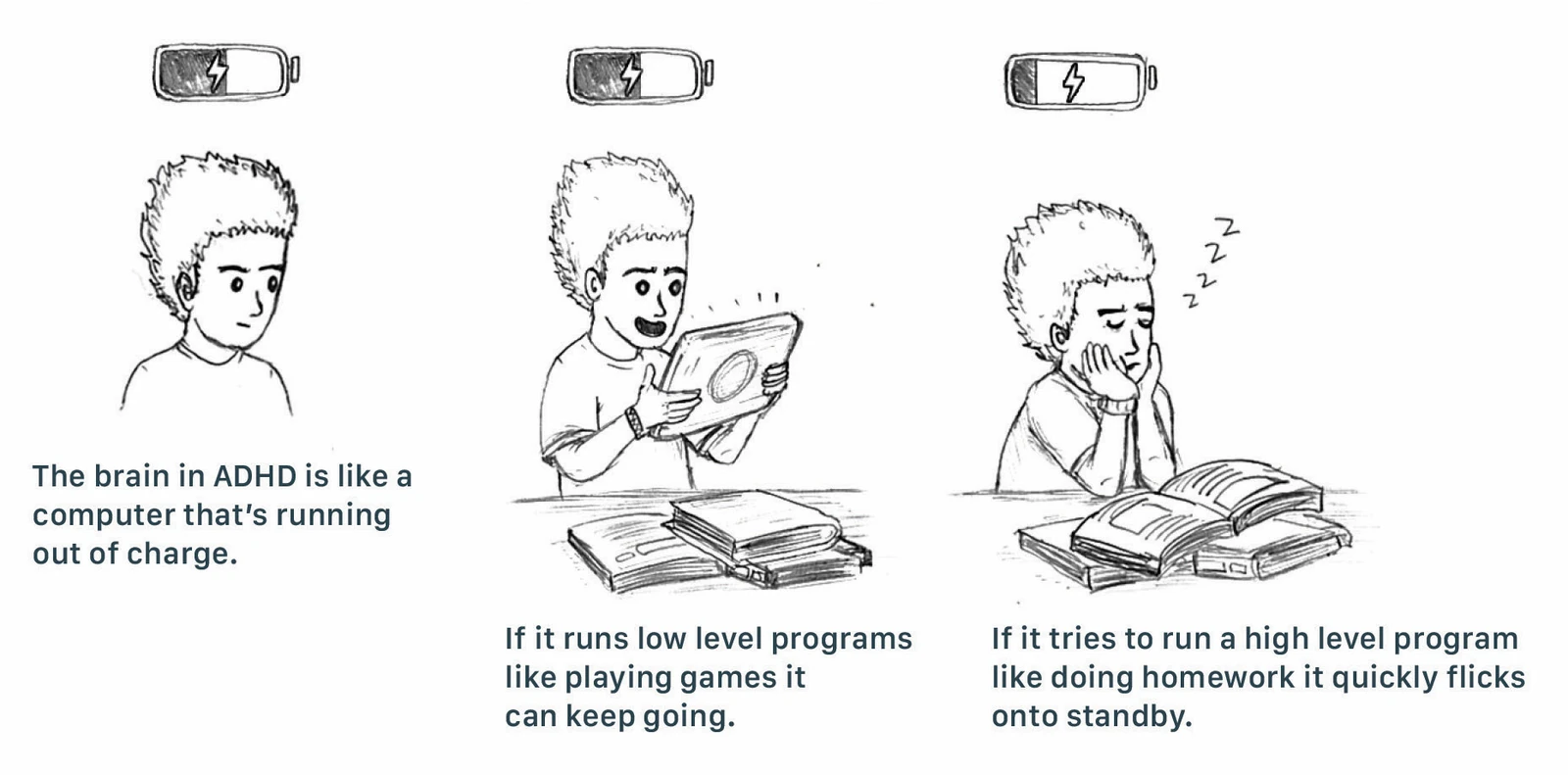
People with ADHD have more difficulty for tasks that involve sustained concentration, particularly if the task is mentally demanding. If a person with ADHD is going to complete a task, that task should either be short and easy or be sufficiently interesting, enjoyable or rewarding to keep them engaged. People with ADHD may be able to concentrate for a long time on electronic games. These typically do not involve much independent or creative thought and also provide constant stimulation that catches and keeps the attention.
Hyperactivity
Hyperactivity is common in ADHD and is the most easily recognised feature, as the child moves rapidly from one distraction to another. This restless energy may make it difficult for a child to remain seated to long enough to concentrate on schoolwork. Hyperactivity may also make a person excessively talkative, even appearing to talk just for the sake of talking and may lack the patience to stop talking and listen. Hyperactivity tends to lessen with age. Even though some adults with ADHD are still hyperactive, some hyperactive children develop into underactive and unmotivated teenagers.
Impulsivity
People with ADHD often have quick reactions that occur without having time to stop, think and make a decision. Therefore someone with ADHD may say or do something hurtful, or repeatedly get into trouble for impulsively calling out in class. A person with ADHD may deny responsibility and consider such actions accidental because they are unintended. This lack of impulse control can lead to anxiety and low self-esteem as the person may suddenly be in trouble without any prior warning or intent.
How does ADHD affect someone’s functioning?
Some people think that because they know one person with ADHD, all other people with ADHD will be similar. This is not necessarily true. People have different personalities, interests and skills; ADHD just adds a further source of variability. In particular, a person’s intellectual ability will have a major impact on the way they cope with their ADHD.
One characteristic of people with ADHD is that they are easily distracted. This may occur while they are talking and may lead to forgetting what they were going to say or losing the point while telling a story. Alternatively, becoming distracted during a task and then forgetting to go back and get it finished can lead to a person being inefficient and disorganised. People with ADHD often have difficulty ignoring distractions and this may make them particularly intolerant to background noise while trying to concentrate. This could be because the noise masks their ‘inner speech’ – their internal dialogue of thoughts. This might lead to the complaint: ‘I can’t hear myself think!’ or to compensation by saying their thoughts out loud. If a person speaks their thoughts, actually hearing the words may be a more effective reminder of what they are trying to do. This strategy could also make a person with ADHD appear excessively talkative.
Losing focus on schoolwork may lead to disruptive behaviour in class. A child who is not able to listen or concentrate on their work may get very bored and start talking and distracting others, or find other more entertaining activities that disrupt the class. A quieter child may cope with their ADHD by working very slowly, perhaps concentrating excessively on neatness. A child may also disguise lapses in concentration by making sure that they continue looking at the teacher or at their work, rather than looking out of the window.
A child with ADHD may have difficulty with age appropriate play. They may easily become bored of a game and have difficulty listening to other children’s ideas, wanting to direct or change the game and therefore appearing bossy.
ADHD is more disabling in people who have learning difficulties. This is because they have to concentrate longer and harder to acquire the same skills. The more difficult the task is for them, the more quickly they will fatigue mentally and give up. Conversely an able child with ADHD may have no difficulty achieving at school during the early years. However, as the work becomes more demanding in high school, intellectual ability by itself may no longer be sufficient and if they are unable to concentrate adequately in class and study consistently their grades may decline. In people who are high academic achievers, their ADHD may not hold them back until they reach university. However, once a person leaves school they usually have more opportunity to choose a career that matches their interests and strengths. ADHD may therefore become less of a problem, although lack of attention in the workplace predisposes to missing instructions and making careless mistakes.
For some people with ADHD, their lack of organisational ability may become more disabling with the complexities of functioning in society as an adult. This can be a particular problem for a young mother who has to cope with running a family and household, managing the children’s commitments and sometimes also having a job.
The features of ADHD are not specific as they also occur in people without ADHD. The difference is that people with ADHD show this behaviour more consistently and it causes significant problems in their daily functioning.
Functional impairment in ADHD
The key to diagnosis of ADHD is not simply a matter of expressing the symptoms but, more importantly, it relates to the consequent impairment in functioning. When assessing the extent of functional impairment it is useful to consider the the following:
- academic or occupational achievement in relation to ability
- peer relationships
- ability to function at home without generating unreasonable levels of stress or disruption
- ability to function at school or at work without generating unreasonable levels of stress or disruption
- level of self-esteem, with low self-esteem associated with increased susceptibility to anxiety and depression
Less efficient thought processes in ADHD – taking ‘mental short-cuts’
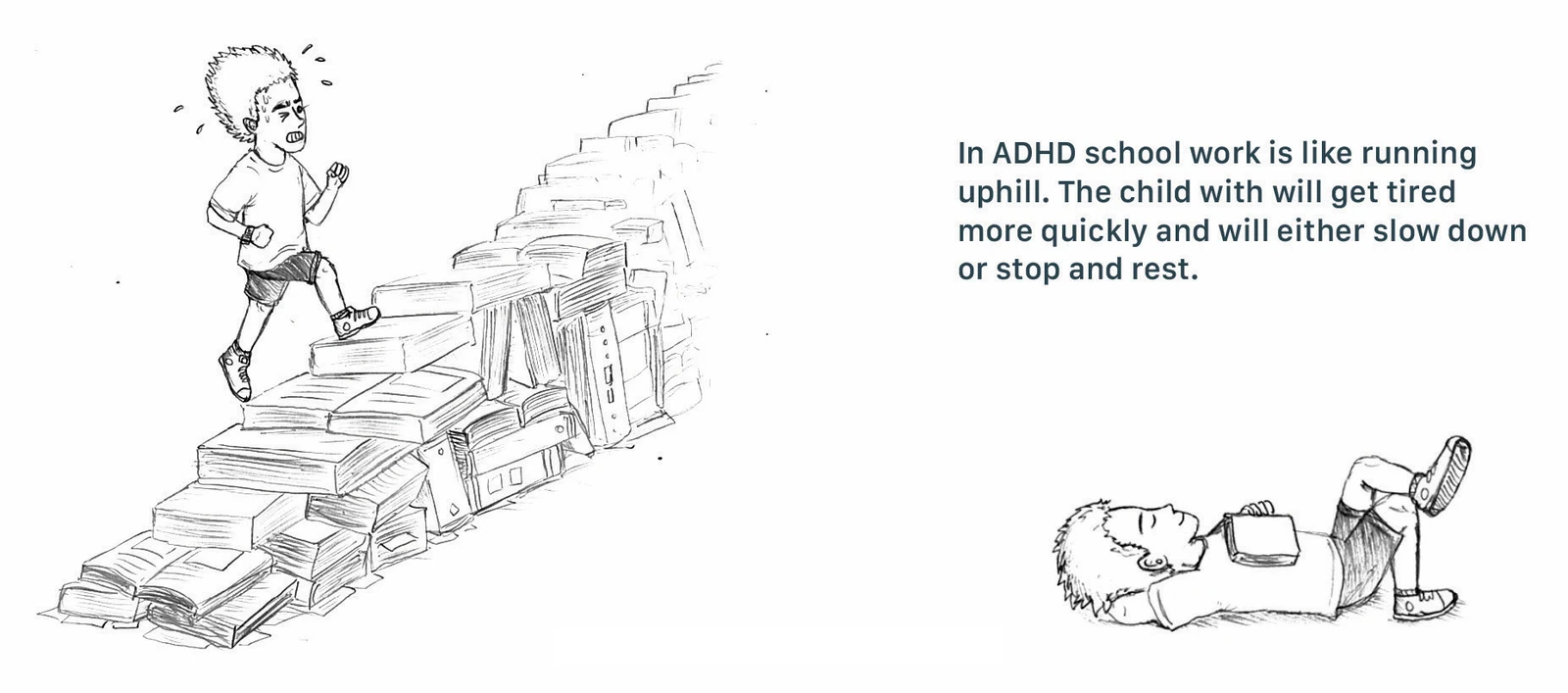
In ADHD mental processes (executive functions) are less efficient. This means that mental tasks that involve thinking require more mental effort. This is like a runner who has to run uphill. It is not that running is too difficult for him, but he will tire more quickly than others who are running along level ground. He will either keep going but run more slowly, or he will try and run as fast as the others and then have to stop to rest. It is like this for mental tasks for people with ADHD. The mental fatigue is genuine and may affect school work, socialising with other people and managing the daily routine at home. Children with ADHD often develop ways of disguising or adapting to the inefficiency of the way their brain works. Some of these could be considered as ‘taking mental short-cuts’.
Schoolwork
A child with ADHD may rush to get work finished within a time span for which he can concentrate. Alternatively he may work for a bit and then stop working and appear to daydream, as if his mind is going blank like a computer on standby. Some people just limit their rate of work to a manageable level by working slowly. This may be disguised by giving too much attention to neatness and therefore doing very little of the more mentally demanding aspects of the work. Creating a distraction may also be an effective work avoidance strategy. An example is the little girl who developed a pattern of turning around and giving her mother a cuddle whenever she felt under too much pressure to do her homework. Other more common avoidance strategies include changing the subject or asking an irrelevant question.
Social interactions
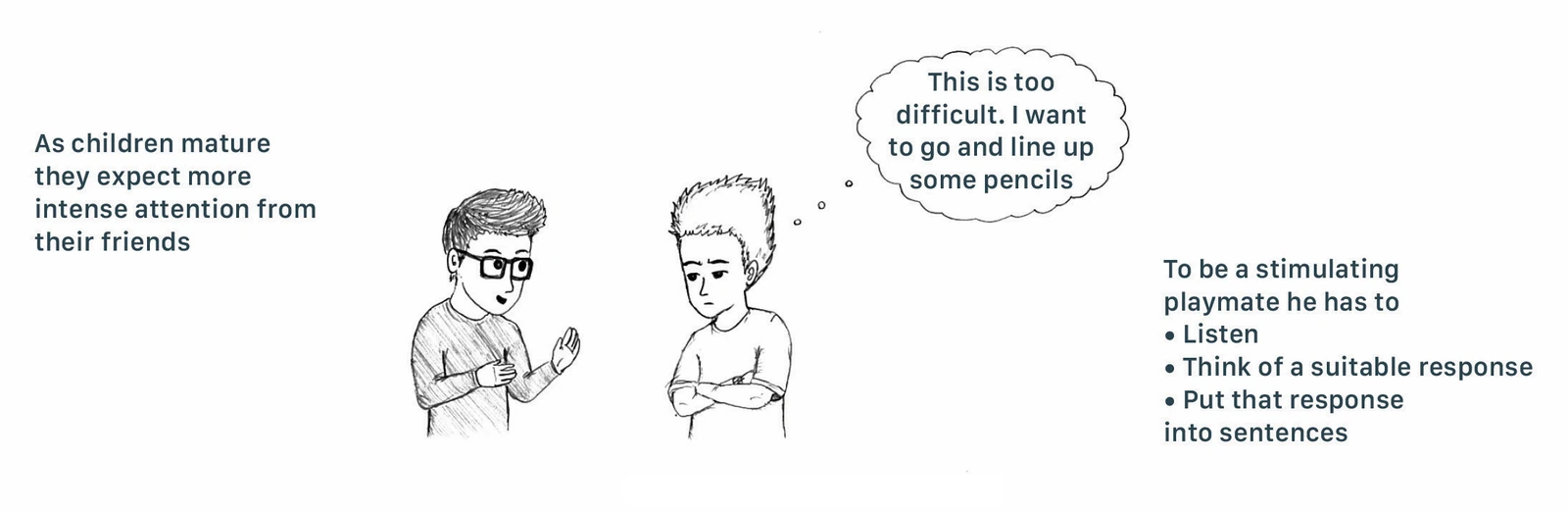
Conversation takes an effort for listening, and additional effort for thinking of a response and making the response into words and sentences. Children with ADHD often use strategies which avoid having to make a mental effort. If a child is asked about who they have played with at school, this involves the effort of thinking back to an earlier part of the day and it may be easier to respond: ‘I don’t remember’. Even playing with friends may be too difficult to sustain and the child with ADHD may withdraw to a less mentally demanding activity.
Routine tasks
Children with ADHD often have difficulty carrying out instructions, particularly if given several together. A child may try to look as though he is listening, by keeping his eyes on the speaker, but if not fully concentrating he may be unable to follow an explanation or carry out an instruction. Sometimes a child may only listen to part of a sentence and guess the rest. Remembering several instructions often involves making an effort by repeating them mentally. If a person is not putting in this effort or is distracted by other thoughts, instructions may easily be forgotten.
Achieving goals in life
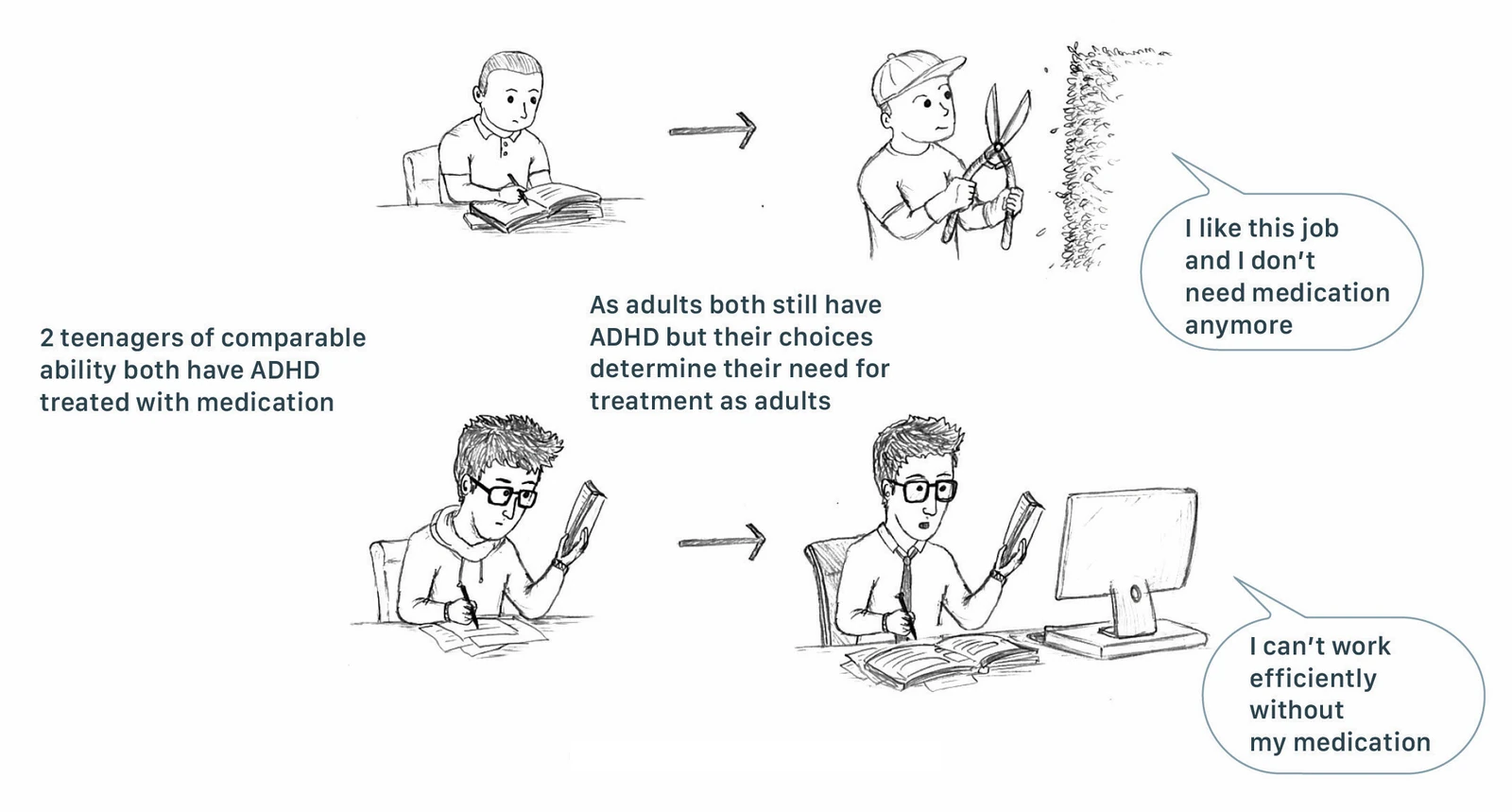
If a person is achieving less due to the unsustainable level of effort they have to put in, they will experience less satisfaction. They will also experience more mental fatigue associated with thinking, or with meeting the intense demands expected by their friends. They may be less ready to put further effort into the next task, with a tendency to give up easily. Inefficient mental processes therefore contribute to underachievement in ADHD and consequent low self-esteem. Some people attempt to preserve their self-esteem by reducing their goals in life to a level that they feel is more achievable. This may lead to dropping out of school into unskilled work or state benefits. This may be through preference or it may framed as a deliberate choice when it is actually an adaptation to being unable to achieve at a higher level. It is important to recognise and treat ADHD, so that people with ADHD who are struggling can receive the help they need to achieve their goals in life. A person’s goals should determine the level of function that they need from their brain, not vice versa. Therefore the young man in the picture below goes into landscaping because this is what he wants to do, not because his concentration prevented him from getting the marks he needed for studying engineering.